Why founders outsource the MVP
- Speed. A team that already works together can start in days. Hiring your own engineers takes months.
- Breadth. An MVP needs design, mobile, backend, an admin panel, DevOps, and QA — rarely one person's skill set.
- Runway. You pay for a defined first version instead of salaries before you know the product works.
- Focus. Founders spend their time on customers and fundraising, not on recruiting and managing engineers.
Agency, dedicated team, or freelancers?
| Model | Who manages delivery | Best when | Main risk |
|---|---|---|---|
| Agency (fixed scope) | The agency | You need a finished, launched MVP and don't have a technical lead | Scope must be clear up front |
| Offshore dedicated team | You | You have a CTO or tech lead who can direct developers daily | Management falls on you |
| Freelancers | You | A small, well-defined job, and you can manage integration yourself | Coordination and continuity |
Making time zones work
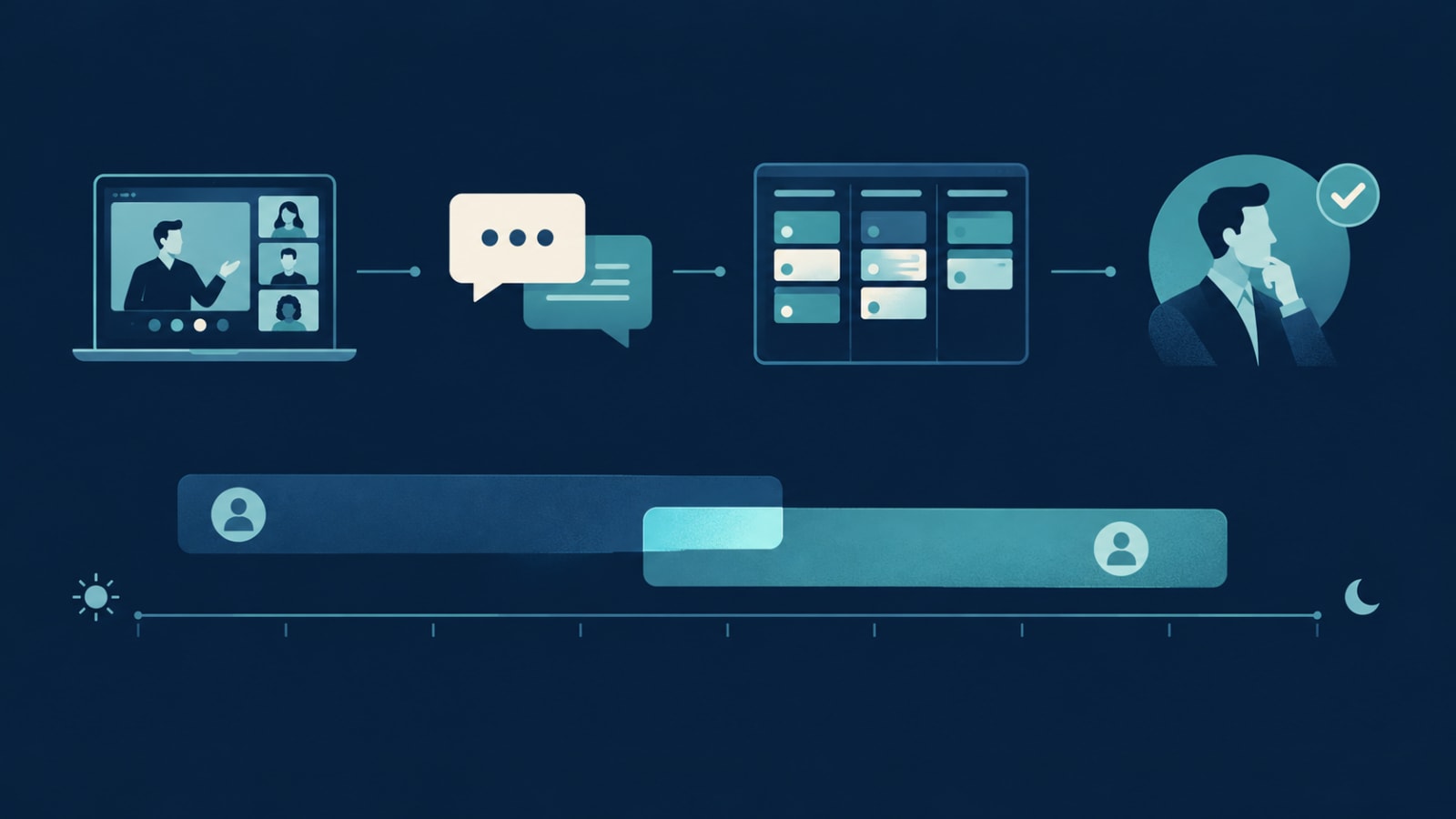
India is 9.5–10.5 hours ahead of U.S. Eastern time and 12.5–13.5 hours ahead of Pacific time, depending on daylight saving. That sounds hard, but it can work in your favour: work you review in the evening is updated by the next morning. To make it work:- Agree on 2–3 hours of overlap each working day for calls and quick questions — usually the Indian evening and the U.S. morning.
- Hold one short weekly demo of working software, not a status report.
- Use written updates for everything else, in a shared channel and a task board you can see.
- Name one decision-maker on your side so questions don't wait on a group.
Protecting your code and your company
- Ownership in the contract. All code and IP transfers to your company — state when (on each payment, or at the end).
- Accounts in your name. Code repository, cloud hosting, domain, App Store and Google Play accounts, payment gateway — all registered to your company, with the team given access.
- NDA and confidentiality covering the agency and every developer who works on the project.
- Exit terms. If the project ends early, you get the code and documentation built so far.
- Data handling. If you serve U.S. or Canadian users, agree where data is hosted and who can access production.
Scope: the single biggest success factor
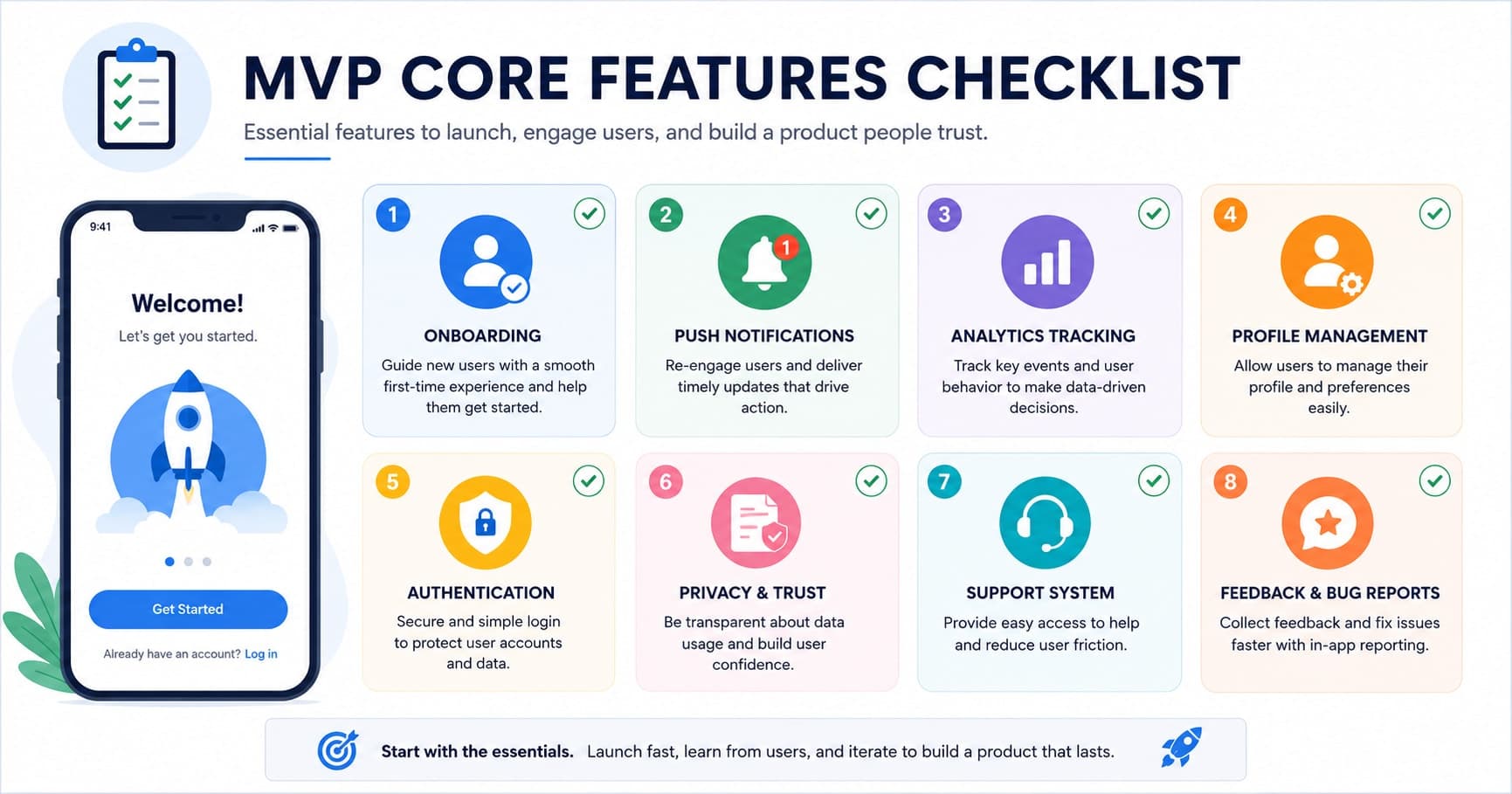
Most outsourced MVPs that fail didn't fail on code quality. They failed because the scope was a paragraph and a few screenshots. Before you ask for quotes, write a short product requirements document: the users, the main workflows step by step, what's in the first version, and what's explicitly not. Our 12 features every MVP should include and MVP vs full product help you draw the line.How to check quality before you commit
- Ask for live apps or sites you can use — not screenshots — ideally serving users in your market.
- Speak to the developers who'll write your code, not only the salesperson.
- Ask for a past client reference, and ask them what went wrong.
- Start with a small paid phase — scoping, design, or one core flow — before the full build.
- Check how they test and deploy: staging environment, device testing, and store submission.
What this looks like in practice
RentEra, a property management platform live in the U.S. and Canada, was built by our team in India: an operations portal, a tenant app, a staff app, and a marketing site, with e-signing and online rent payments built in. The pattern is the one described above — a clear scope, weekly working demos, and every account owned by the client.Red flags
- A quote far below everyone else's with no itemised breakdown
- Accounts, code, or domains held in the agency's name
- No live work you can try
- No time-zone overlap offered, or replies that take days
- "Yes" to every feature with no questions about your users or goals
- No plan for bugs and support after launch
FAQ
Is it a good idea to outsource MVP development?
For most early-stage founders, yes. An MVP's job is to test demand quickly, and outsourcing gets you there without months of hiring. Keep product decisions, customer conversations, and account ownership in-house.How do I manage an outsourced team in a different time zone?
Agree a few hours of daily overlap, hold a weekly demo of working software, keep all other updates written in a shared channel and task board, and name one decision-maker on your side.How do I protect my IP when outsourcing to India?
Put code and IP ownership in the contract, sign an NDA that covers every developer, and register the repository, hosting, domain, and store accounts in your company's name from day one.Should I hire an offshore dedicated team or an agency?
Choose a dedicated team if you have a technical lead who can manage developers every day. Choose an agency with a fixed scope if you need someone else to own delivery and get the MVP launched.What should I keep in-house after the MVP?
Product direction, pricing, customer feedback, and ownership of the code and accounts. Once the product has steady weekly work, hire your first in-house engineer and plan a handover with documentation and a few weeks of overlap.Planning an MVP and weighing an outsourced team? Book a free scoping call — we'll map your first version, suggest what to leave out, and give you a fixed, itemised quote.