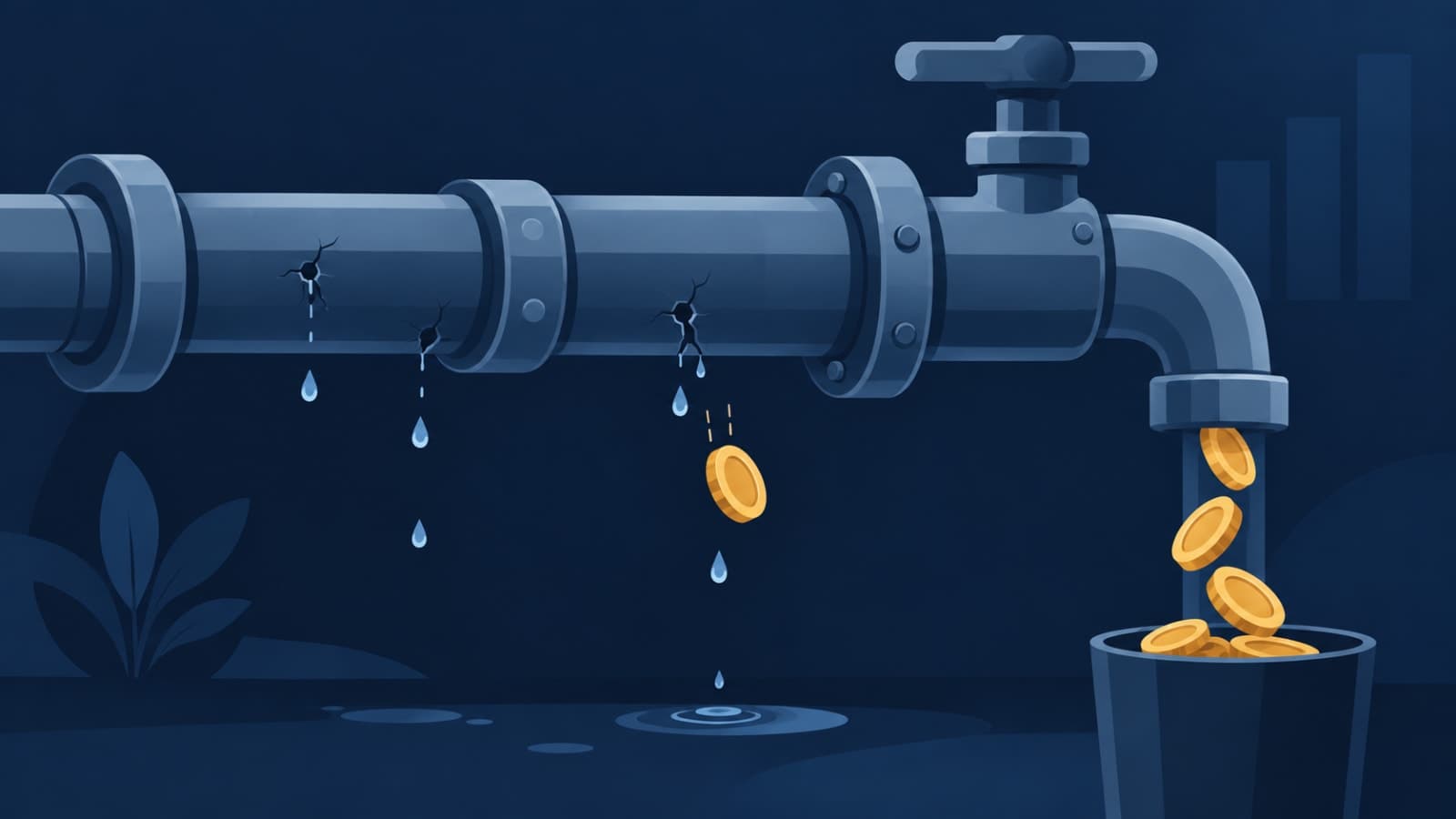
Your MRR dashboard looks fine. Revenue is up, churn looks manageable, and nothing on the monthly report seems urgent enough to investigate. Meanwhile, a slow leak is running underneath that dashboard — a card that expired three renewals ago and was never recovered, a mid-cycle upgrade that charged the wrong amount, a webhook that arrived twice and quietly double-processed a refund. None of these show up as a single alarming number. They show up as a gap between what your billing provider says you collected and what actually landed in your bank account, and most finance teams can't even quantify how big that gap is.
This is the piece of subscription infrastructure that gets the least attention relative to how much money moves through it. Payment integration is usually treated as "done" the day checkout works. In reality, checkout working is the easy 20% — the other 80% is tracking every renewal, every upgrade, every failed charge, and every webhook event correctly for years afterward, and it's exactly where revenue quietly disappears.
The Three Places Revenue Quietly Disappears
Subscription revenue leakage generally comes from three distinct sources, and each needs a different fix: payments that fail and are never recovered, proration math that goes wrong during plan changes, and webhook events that arrive late, twice, or out of sequence and corrupt your billing state as a result. Industry benchmarks put total SaaS revenue leakage at roughly 3–5% of annual recurring revenue — and a widely cited survey found that 73% of SaaS finance teams admit they can't actually quantify their own leakage. That combination is exactly why this kind of gap runs for months before anyone notices.
Failed Payments: The Churn That Doesn't Look Like Churn
Involuntary churn — a subscription lapsing because a payment failed, not because a customer chose to leave — consistently accounts for 20–40% of total subscription churn across the industry, and higher in consumer-facing or payment-heavy segments. The customer never clicked cancel. Their card expired, their bank flagged the transaction, or a temporary hold blocked the charge, and the subscription just stopped renewing. Research from PYMNTS found that in roughly four out of five cases, payment failures come from system friction — false declines, processor issues, expired credentials — rather than a customer genuinely being unable to pay. That distinction matters enormously: this isn't lost revenue you have to win back through a retention campaign. It's revenue sitting right there, waiting to be recovered, if your dunning process is built to catch it.
Recovery rates vary hugely based on how much attention this gets. Default automated retry systems typically recover 30–40% of failed payments. Teams that invest in smarter retry timing (syncing attempts with paydays, for instance), personalized recovery emails, and card-updater services routinely push that to 50–70%, with some best-in-class programs reaching higher still. The gap between default and optimized recovery is pure margin sitting on the table — worth reading alongside how much margin should software eat into your product's price, since failed-payment recovery is one of the few margin levers that costs almost nothing to improve once it's built correctly.
One easy way to burn through recovery opportunities without noticing: card networks cap how often you can retry a declined charge. Visa, for example, limits retries to 15 attempts per card within 30 days, and exceeding that threshold triggers per-attempt fines that compound quickly at scale. A dunning system that retries indiscriminately instead of reading the specific decline reason isn't just less effective — it can actively cost you money on top of the revenue it fails to recover.
Involuntary churn requires only that you recover a payment from someone who still wants your product. The recovery math is far more favorable than winning back a customer who chose to leave.
Common framing in subscription revenue recovery research
Proration Errors: When "Upgrade Now" Quietly Breaks the Math
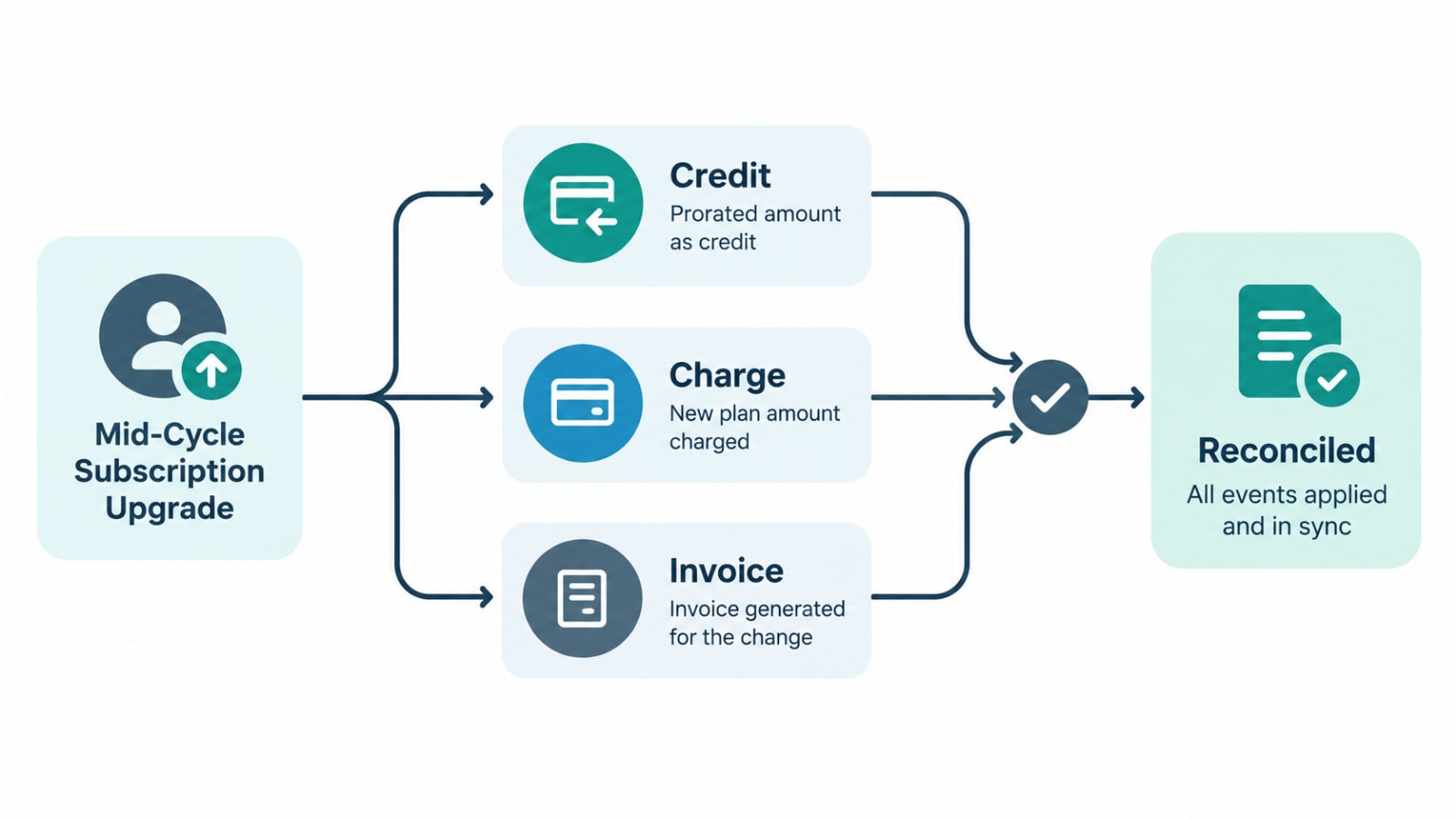
A customer upgrades mid-billing-cycle from a $10 plan to a $20 plan. In theory, that's simple arithmetic — a credit for unused time on the old plan, a charge for remaining time on the new one. In practice, your application doesn't receive one clean "upgrade completed" event. It receives a sequence of separate subscription and invoice events, each with its own creation time, delivery time, and payment outcome, and all of that has to be reconciled into a single correct final state.
The most common mistake here is trying to pre-calculate proration in your own application instead of trusting the number your payment provider computes. Two systems doing the same math independently will eventually disagree — different timestamp precision, different rounding, a discount applied on one side but not accounted for on the other — and the customer ends up with an invoice that doesn't match what your app displayed. The safer pattern is to treat your billing provider as the single source of truth for the calculation and have your application project that result, rather than compute it twice and hope the two numbers agree.
Webhook Events Arriving Twice or Out of Order
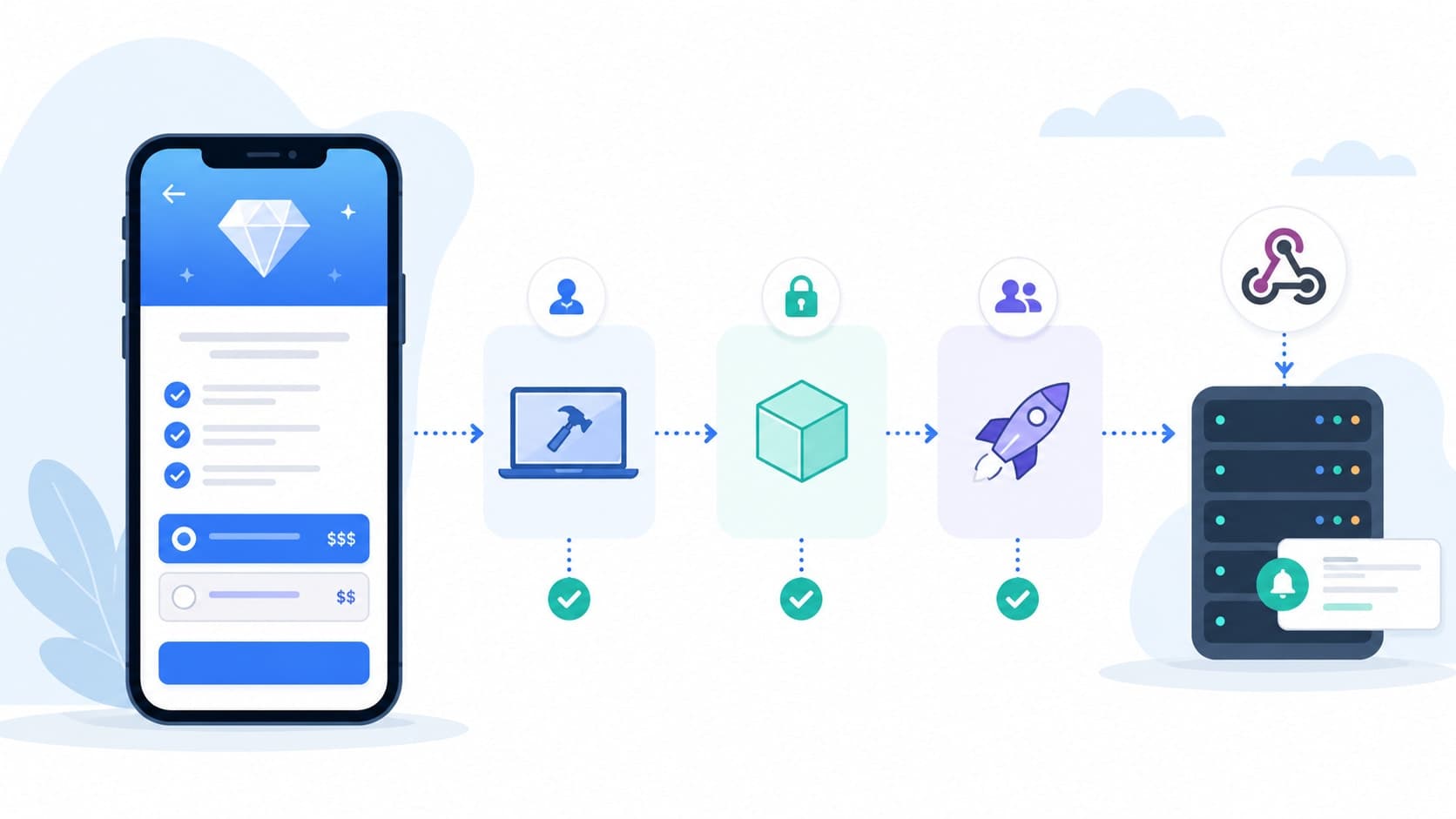
Every major billing provider — Stripe, Razorpay, the app store platforms — delivers webhook events on an at-least-once basis, not exactly-once. That's not a bug or an edge case; it's explicitly documented behavior. Your endpoint can and will occasionally receive the same event more than once, and delivery order is not guaranteed. If your webhook handler isn't built to expect this, two specific failure patterns show up in production with some regularity: a duplicate event that gets processed twice, double-charging or double-crediting a customer, and an older event arriving after a newer one, overwriting a customer's current, correct subscription status with stale data.
The standard fix for duplicates is straightforward: record every processed event's unique ID in a dedicated table before acting on it, and skip any event whose ID you've already seen. The fix for ordering is different — rather than reacting to "the event that just arrived," your handler should re-fetch the current state of the subscription from the provider and reconcile against that, so an out-of-order delivery converges on the correct final state regardless of which order events actually arrive in. This is exactly the class of problem covered more broadly in the 6 systems every SaaS founder doesn't see until something breaks — two systems disagreeing not because anything is fundamentally broken, but because one hasn't caught up with the other yet.
- Duplicates are guaranteed, not rare. Every handler needs to check whether it has already processed a given event ID before acting on it.
- Ordering is never guaranteed. Design handlers to reconcile against current state rather than trusting that events arrive in the sequence they happened.
- Critical amounts belong in the event payload itself. Fetching "current" data mid-processing risks acting on a value that's already changed since the event was generated.
- Retries can run for days. Most providers retry failed webhook deliveries for up to 72 hours — long enough that a broken endpoint can silently drift out of sync with reality before anyone notices.
Why Most Finance Teams Can't See This Happening
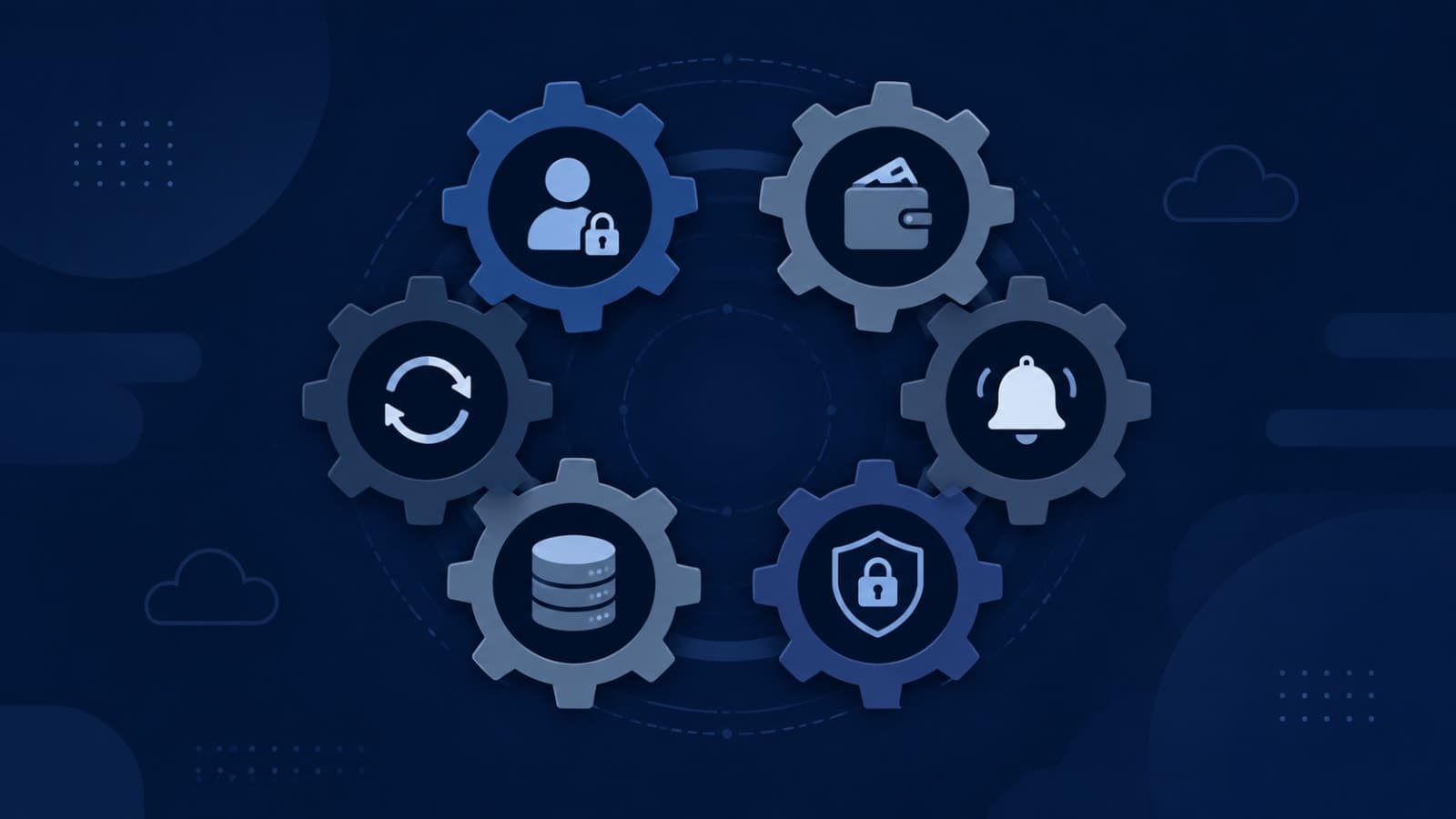
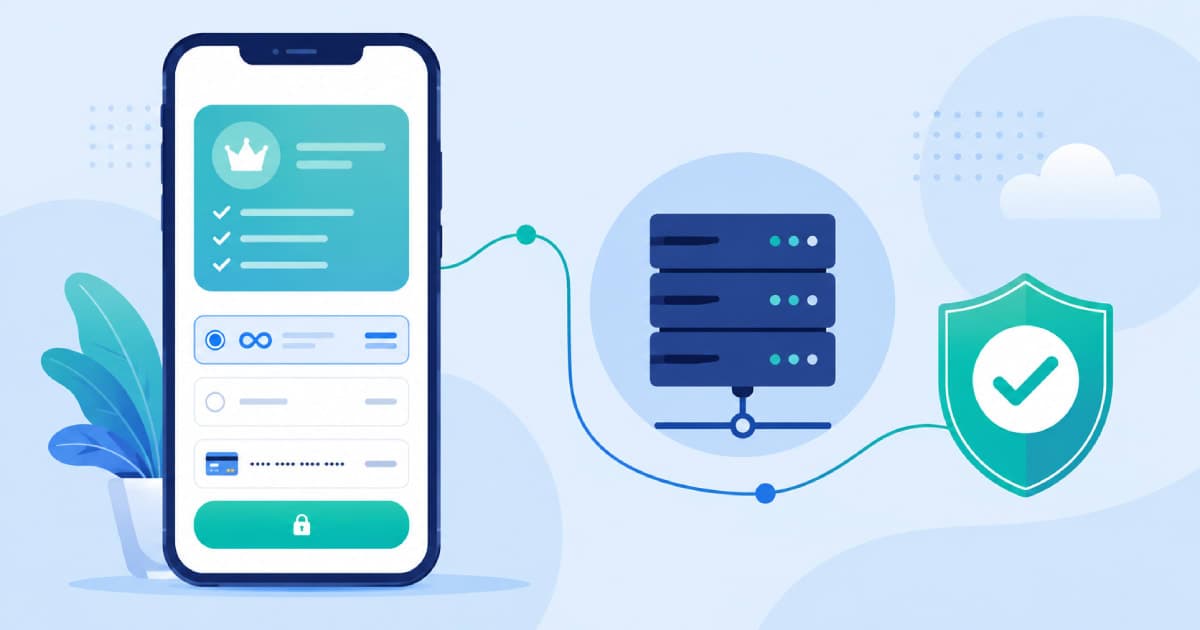
The reason this leaks for months rather than getting caught immediately is structural: the true state of a subscription lives in three places that don't automatically agree with each other — your payment provider's dashboard, your own application database, and whatever finance is reading off a monthly export. Each one is technically correct at the moment it's read, but a webhook delay, a duplicate event, or a proration mismatch between any two of them shows up as a discrepancy nobody is specifically watching for. This is the same underlying pattern covered in should your team be able to edit customer data directly — without a clear audit trail and a single source of truth, a manual "quick fix" to reconcile one customer's record papers over the symptom without ever surfacing the underlying cause.
How to Catch This Before It Costs Months of Revenue
- Track involuntary churn as its own metric, separate from voluntary cancellations. If you're only looking at total churn, a growing failed-payment problem hides inside a number that looks stable.
- Build idempotent webhook handlers from day one — a table of processed event IDs is a small amount of engineering effort relative to the billing bugs it prevents.
- Never pre-calculate proration independently of your billing provider; project their computed result instead of racing to match it.
- Read decline codes before retrying a failed payment, rather than retrying every failure on the same fixed schedule — a hard decline (expired card) needs a different response than a soft decline (insufficient funds).
- Reconcile your app's subscription state against your payment provider's on a schedule, not just reactively through webhooks, so a missed or corrupted event gets caught within hours instead of months.
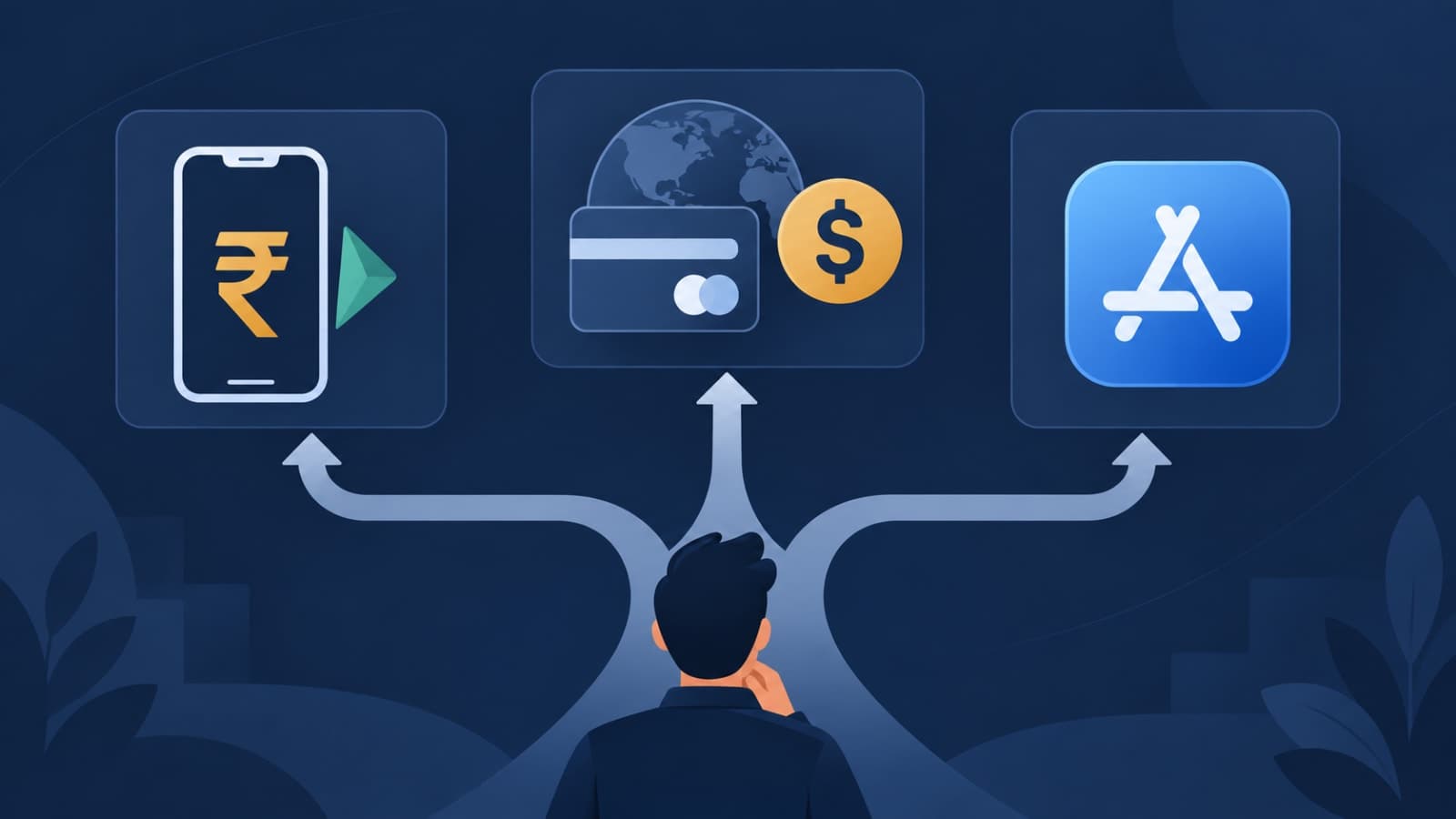
- Review your payment rail choice against your dunning needs — retry behavior, decline-code granularity, and recovery tooling differ meaningfully between providers, a decision covered in Razorpay, Stripe, or Apple/Google IAP: choosing the right payment rail.
Where This Gets Engineering-Deep
Everything above is the conceptual map — enough to know what to ask your engineering team and what to watch for in your own numbers. If you're implementing this directly, particularly for mobile subscriptions, our guides on building a production-ready in-app purchase subscription flow and how to test app store subscriptions cover the implementation and testing details this post intentionally leaves out.
How We Approach This at Fall Rise
Recurring billing reliability is something we design for from the first architecture conversation, not something we patch after the first support ticket about a wrong charge. On RentEra, our property management platform, monthly rent collection behaves like a subscription in every way that matters — missed payments need the same kind of structured follow-up as a failed SaaS renewal, not a one-size-fits-all reminder. On the Umiya Jari Inventory System, every transaction runs through ACID-compliant processing specifically so a duplicate or out-of-order event can never leave a financial record double-counted or half-updated. You can see more of how we structure payment reliability across our project portfolio.
This is a standard part of how we scope any SaaS platform or mobile app with recurring billing, and it's exactly the kind of reliability work that lives inside backend API development rather than being visible in a feature demo. It's easy to skip until the first quarter where the numbers don't quite add up.
A dashboard that only shows totals will never show you this kind of leak — it has to be caught at the level of individual failed payments, individual proration events, and individual webhook deliveries. None of it is dramatic on its own. Together, over months, it's real money. If you want a second opinion on how your own subscription billing is holding up, let's talk.