How to Increase Retention in Your Product: It's Decided in the First 7 Days
Most users who leave your product decide to within days. Here's how to find your activation moment, shorten time to value, and build a first week that brings users back.
Product Strategyuser-retentiononboardingactivationproduct-growthchurn3 min read·
Founders often try to fix retention by adding features. But most users who leave don't leave because a feature is missing. They leave because they never experienced the value of the features you already have.
The numbers are stark. Andrew Chen's widely cited analysis of Quettra data found the average mobile app loses about 77% of its daily active users within the first three days after install, and around 90% within 30 days. On the other side, Bain & Company's classic research found that a 5% increase in customer retention can lift profits by 25–95%. Retention is where growth compounds, and it's mostly decided in the first week.
Step 1: Find your activation moment
Your activation moment is the first time a user gets real value: the first invoice sent, the first booking confirmed, the first journal entry saved and revisited. Users who reach it retain; users who don't, mostly don't.
To find it, compare users who are still active after 30 days with those who left. What did the retained group do in their first few days that the others didn't? That action is your target. Your admin dashboard should be able to answer this. If it can't, that's the first thing to fix.
Step 2: Shorten the path to value
Cut signup fields. Ask only what you need now; collect the rest later. One-tap Google or Apple sign-in removes a whole step.
Skip the empty screen. Pre-fill templates, sample data, or a guided first action so users don't face a blank page.
Delay the paywall or setup chores until the user has seen the product work.
Use a short checklist: three to five steps that lead directly to the activation moment.
Step 3: Design the first 7 days
Think of the first week as a sequence, not a single onboarding screen:
Day 0: reach the activation moment in the first session.
Day 1: a reason to come back: a result, a reminder, or the next step.
Days 2–4: introduce one more feature that deepens the habit.
Days 5–7: show progress: what they've achieved, saved, or built so far.
Messages across push, email, and in-app need to be triggered by what the user did, not sent on a fixed timer. That takes more engineering than most teams budget for; we explain why in the notification system nobody budgets for.
Step 4: Remove the silent reasons people leave
Slow or crashing screens. Performance problems quietly kill retention. See our app performance guide.
Failed payments. Many "churned" subscribers never chose to leave; their card simply failed. That's revenue leaking quietly.
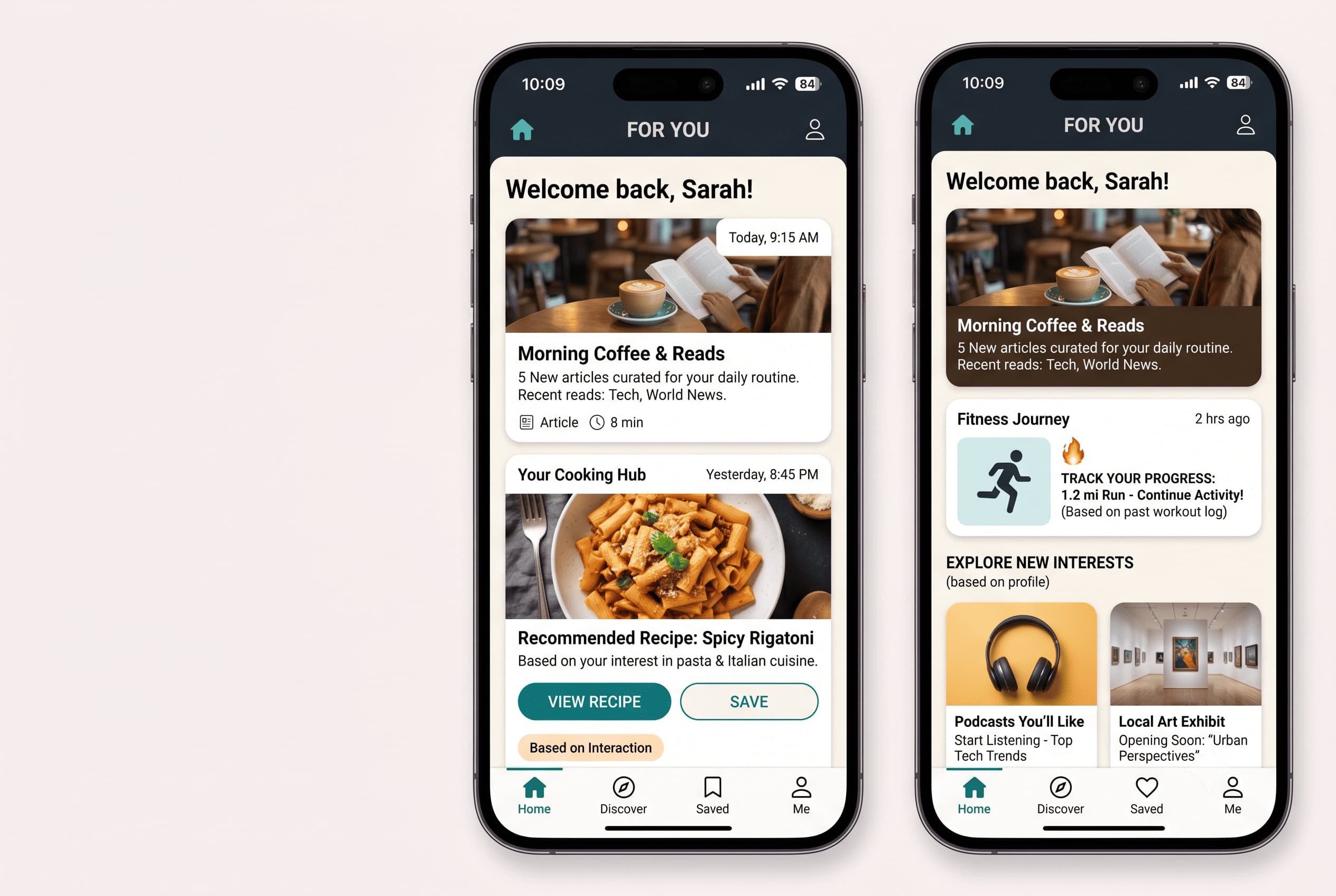
Irrelevant content. Showing everyone the same thing wastes attention. Smart content delivery adapts what users see.
Unresolved bugs. If support keeps seeing the same issue, fix the root cause.
Step 5: Measure retention properly
Total active users hides everything. Track cohort retention (of the users who signed up in a given week, what share are still active on day 1, 7, and 30) and watch whether new cohorts retain better than old ones after each change.
For habit-based products, retention is the whole game. In a journaling app like Penso Notes, value only appears once writing becomes routine, so the first week matters more than any single feature.
Retention is a product decision
The best retention work usually isn't a campaign. It's removing friction, instrumenting the right events, and building the triggers that bring people back. Want to know where your users drop off? Our SaaS and mobile app teams can audit your first-week journey. Get in touch.