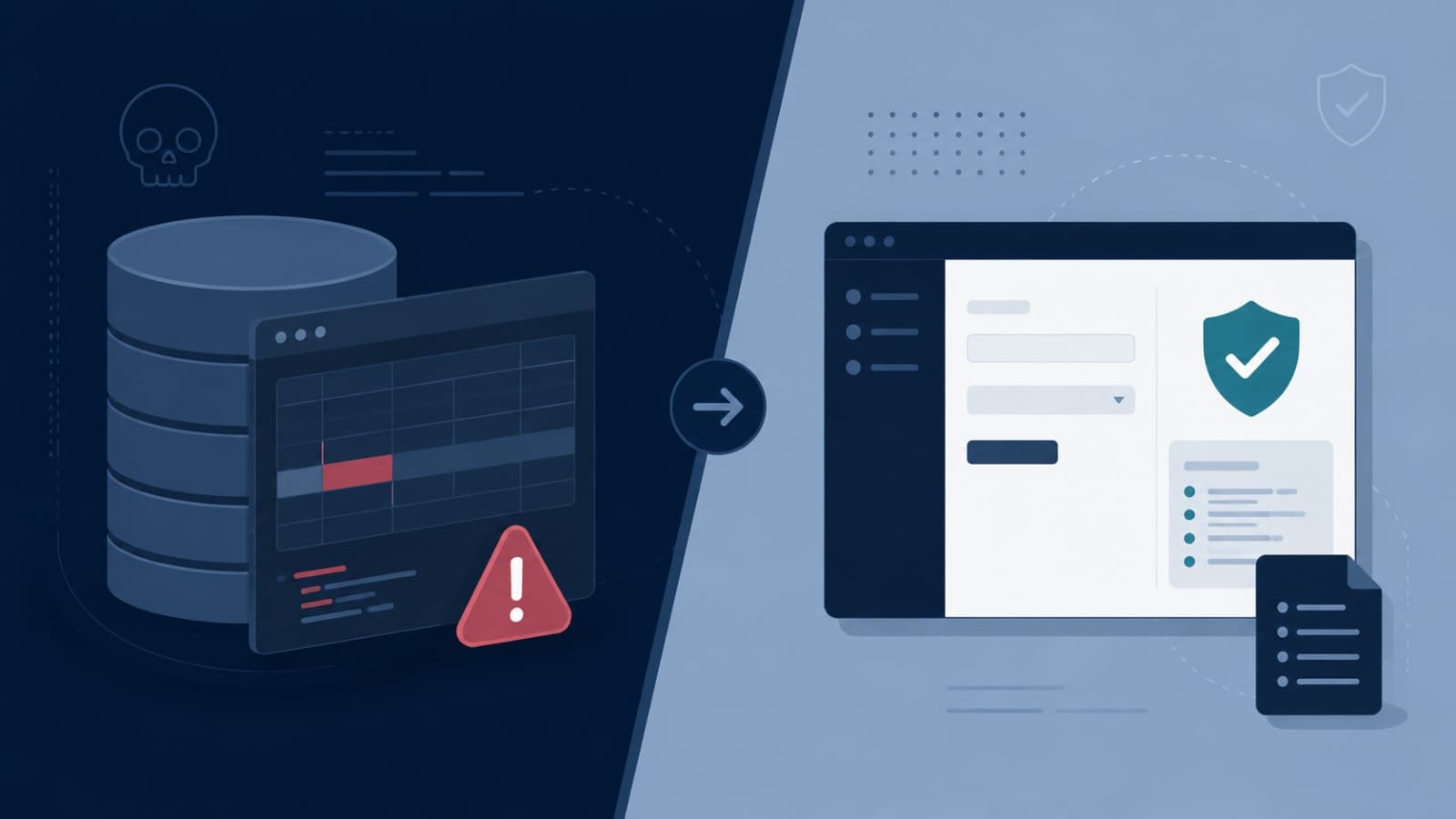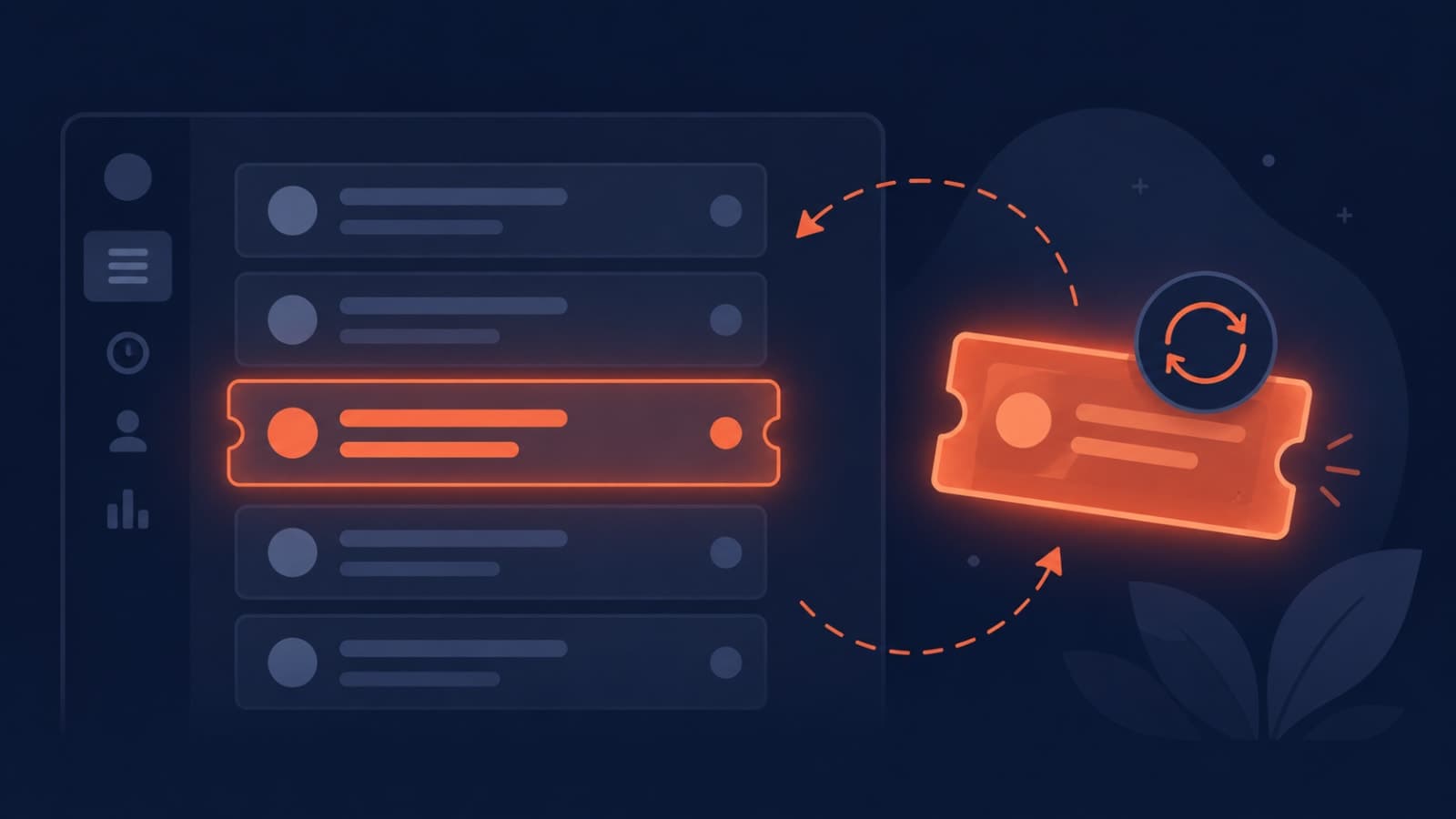
Every support team has a version of this list: the same five bugs, filed under different ticket numbers, resurfacing every few weeks no matter how many times engineering "fixes" them. A permissions glitch that locks out a user after a password reset. A sync issue that only shows up for one specific data state. A checkout error that comes back the moment traffic spikes. Support agents start recognizing them by symptom before they even open the ticket — and that recognition is itself the warning sign. Recurring bugs are rarely a sign of a careless engineering team; they're almost always a sign of a process gap between what breaks, what gets fixed, and what gets remembered.
This matters more than it looks like on a support dashboard. Every repeat ticket costs agent time, erodes the customer's confidence that the product actually works, and quietly increases churn risk in ways that rarely show up until the renewal conversation. If you're running a lean team without a dedicated QA function — which describes most early and growth-stage startups — the same five bugs can consume a disproportionate share of engineering time that should be going toward the roadmap.
Why the Same Bugs Keep Coming Back
"Too many bugs" is not one problem — it's usually a mix of at least a few distinct failure patterns, and each one needs a different fix. Applying the wrong fix (more code review when the real issue is missing regression tests, for example) burns effort without moving the needle. Before reacting, it helps to sort recurring issues into the category they actually belong to.
1. The Fix Never Got a Regression Test
A bug gets patched, the ticket closes, and everyone moves on. Then a later change — sometimes completely unrelated — quietly breaks the same code path again, because nothing was in place to catch it. This is the single most common reason a "fixed" bug comes back, and it's also the easiest to diagnose: if support can point to the same ticket being reopened two or three times, ask whether a test was written the first time it was closed.
2. The Symptom Was Fixed, Not the Cause
Under deadline pressure, it's tempting to patch the specific case a customer reported rather than trace the failure back to its source. A null-check added around one crash report doesn't stop the same underlying data problem from causing a different crash somewhere else next month. Root cause analysis techniques like the "5 Whys" exist specifically to stop teams at the symptom layer from calling the job done.
3. Support and Engineering Are Working From Different Information
Frontline support usually sees only what the customer describes — not the underlying error trace, the affected code path, or whether three other customers hit the identical issue last month under a different description. Without a shared view of error logs, past tickets, and system telemetry, agents escalate not because the problem is unsolvable, but because they've hit the edge of what's visible to them. This information gap is one of the most common — and most fixable — drivers of unnecessary escalations to engineering.
4. The Architecture Is Over-Coupled
If fixing one thing reliably breaks another, that's not a testing problem — it's a sign that parts of the system that should be independent are tangled together. This pattern shows up often in codebases that grew quickly without a clear service boundary between, say, billing logic and user profile logic. No amount of QA discipline fixes a coupling problem; it needs a scoped refactor.
5. The Requirement Was Never Actually Agreed On
Some "bugs" aren't bugs at all — they're a mismatch between what was built and what the customer expected, filed as a defect because that's the only channel available. If the same feature keeps generating "that's not what I meant" tickets, engineering can patch the code all year without the complaints stopping, because the fix that's actually needed is a clearer product decision, not a code change.
The goal isn't zero bugs — it's a codebase and a process where bugs can be found quickly, fixed confidently, and prevented from recurring.
Working principle in root cause diagnostics
What Recurring Bugs Actually Cost You
The cost of a defect rises sharply the later it's caught. A bug found in testing is far cheaper to fix than one a customer discovers in production, and a bug that keeps resurfacing multiplies that cost every time it reopens — in support hours, in engineering context-switching, and in the trust a customer loses each time they have to report the "same thing" again. For a lean team, that repeated cost is often bigger than the cost of the original fix.
- Support hours: agents re-diagnosing an issue they've already solved before, instead of handling new tickets.
- Engineering context-switching: developers pulled off roadmap work to re-investigate something that was supposedly closed.
- Customer trust: each repeat occurrence signals the product isn't stable, which shows up later as churn or a hesitant renewal conversation.
- Invisible technical debt: the underlying cause stays in the codebase, ready to resurface in a new form next quarter.
How to Actually Break the Cycle
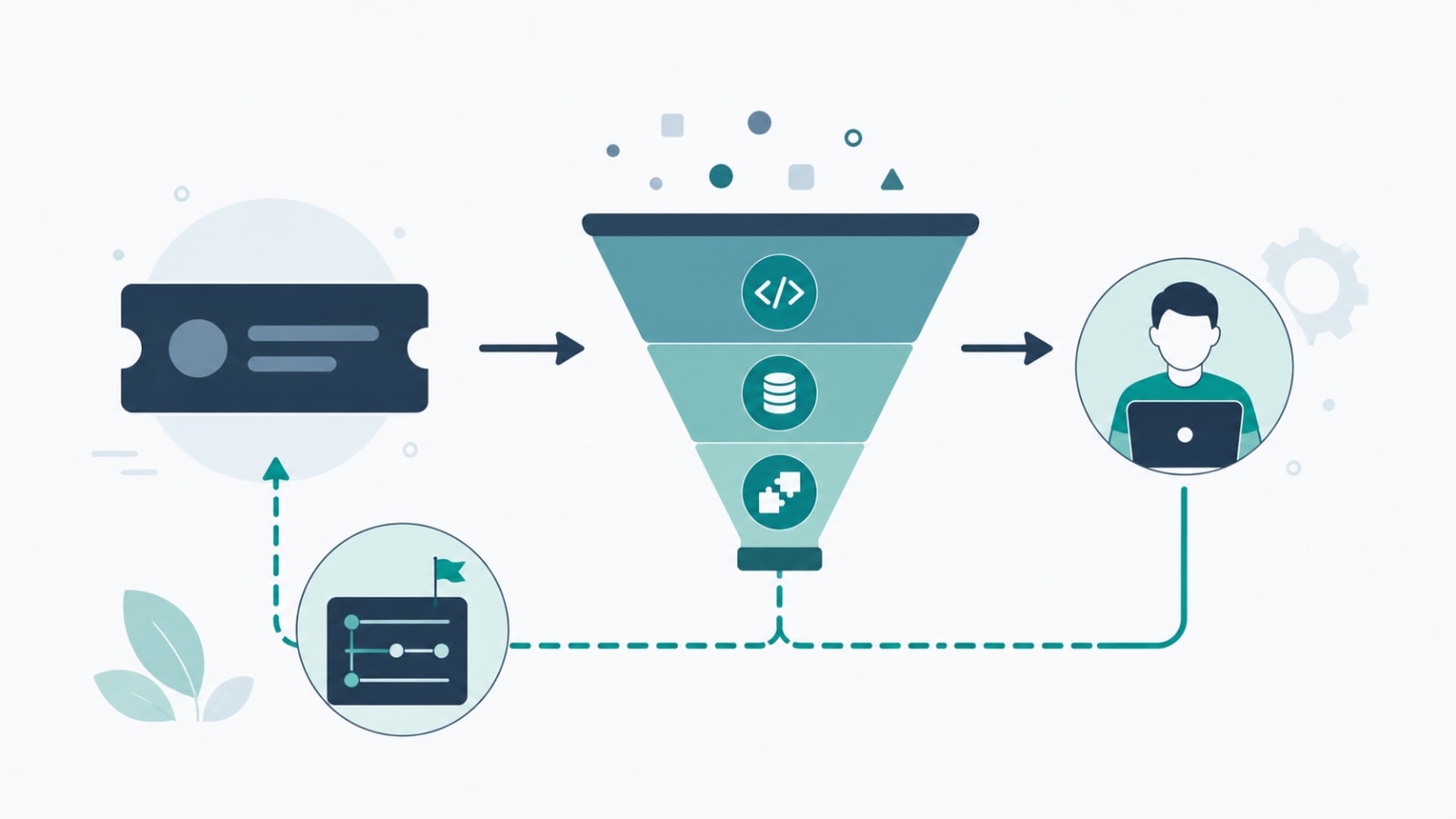
None of this requires a large QA department. It requires treating escalation data as information rather than noise, and closing the loop between the people who see the bug first and the people who fix it.
- Tag every escalation by root cause, not just symptom. A simple category field — "regression," "missing test," "data edge case," "requirement mismatch," "coupling issue" — turns your ticket history into a diagnostic tool instead of a backlog.
- Require a regression test before a bug ticket closes. This one rule prevents the most common repeat-bug pattern outright, and it costs almost nothing to enforce once it's a team norm.
- Give support visibility into error tracking, not just ticket history. Tools like Sentry, session replay, or basic structured logging let a frontline agent see the actual stack trace or affected user session instead of guessing from a customer's description.
- Run a short root-cause review monthly, not just when something breaks badly. Ten minutes reviewing which categories of bugs recurred that month is usually enough to spot a coupling problem or a missing test discipline before it compounds.
- Separate "expected behavior" disputes from real defects early. If a ticket is really a product decision disguised as a bug report, routing it to product instead of engineering stops wasted development cycles.
When the Real Fix Is Outside Support's Control
Some recurring bugs point to something support and even in-house engineering can't fully solve alone — an architecture that's grown past what the original design intended, infrastructure that isn't monitored closely enough to catch the failure before a customer does, or a codebase inherited from an off-the-shelf tool that was never built to handle current usage patterns. These situations often line up with the same signals covered in 7 Signs Your Business Has Outgrown Off-the-Shelf Software: if the same limitation keeps causing support tickets, the underlying system may need a rebuild rather than another patch.
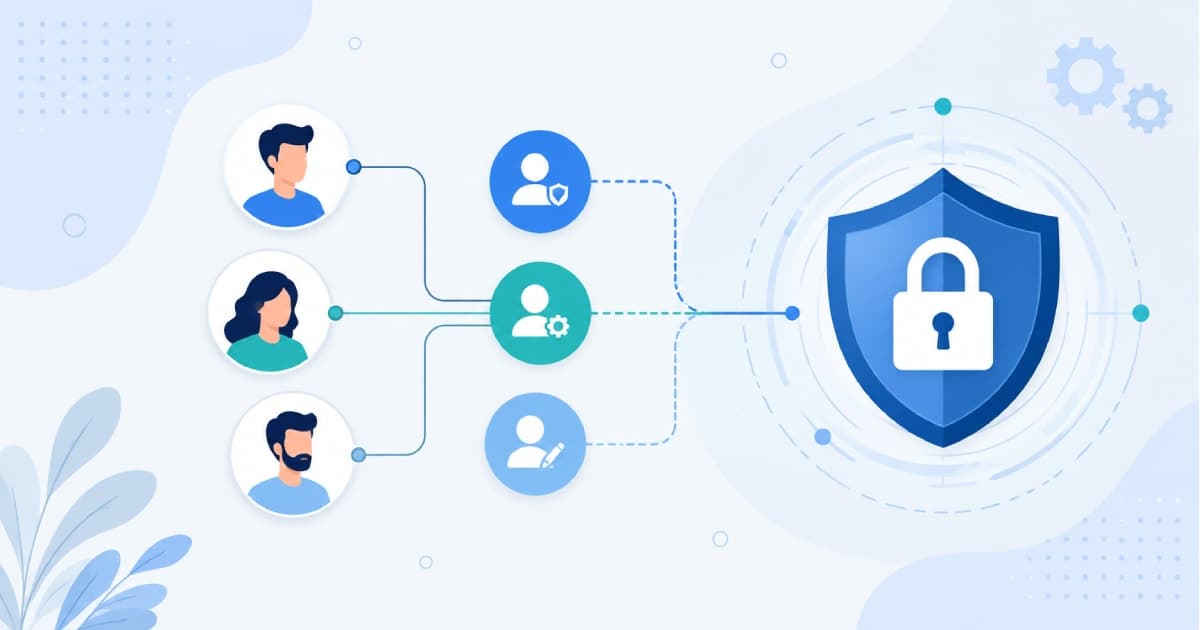
Permission and access bugs are a good example of a category that's almost always architectural. If support keeps seeing tickets where a user can see or do something they shouldn't — or can't do something they should be able to — that's rarely a one-line fix. It usually traces back to how roles and permissions were structured in the first place, which is exactly the pattern covered in How Role-Based Access Control (RBAC) Works in Your System. Getting RBAC right at the architecture level eliminates an entire category of recurring escalations before they start.
Infrastructure-level bugs follow a similar pattern — intermittent errors under load, sync failures during deploys, or issues that only appear on certain regions or devices often trace back to hosting configuration rather than application code. A monitored, properly configured hosting and deployment setup catches a large share of these before they ever reach a customer, let alone a support queue.
How We Approach This at Fall Rise
When we take over or build alongside an existing product, one of the first things we look at is the support ticket history — not to assign blame, but because it's usually the clearest map of where the architecture is under strain. On projects like Bhaada, our logistics and parcel platform, and RentEra, our rental platform, keeping recurring issues near zero has meant building regression coverage into every backend API change, structuring role and permission logic deliberately rather than bolting it on later, and treating support-reported patterns as direct input into the roadmap rather than a separate bug backlog. You can see more of how we structure this kind of work across our project portfolio.
Whether the underlying product is a mobile app, a SaaS platform, or a custom-built internal system, the fix for chronic escalations is almost never "try harder next time." It's a process that turns every repeat ticket into a root cause, a test, or a design decision — and an architecture that doesn't let the same failure hide in five different disguises.
If your support team can already name the same five bugs off the top of their head, that list is more useful than it feels — it's a ready-made diagnostic for exactly where your product needs attention. The fix usually isn't more support headcount; it's closing the loop between what breaks, why it broke, and who owns preventing it next time. If you want a second set of eyes on a recurring pattern your team can't shake, let's talk.