
The first 72 hours: secure access before anything else
Before you discuss blame, refunds, or a new team, make a list of every account the project depends on and confirm who controls each one. Ask the previous developer politely and in writing to transfer anything still in their name.- Code repository (GitHub, GitLab, Bitbucket) — you need owner access, not just a zip file. The commit history shows what was built and when.
- Cloud hosting and database (AWS, Google Cloud, a VPS) — including billing, so the servers don't get switched off when a card expires.
- Domain and DNS — the registrar account, not just the domain name.
- App Store and Google Play developer accounts — these should be registered to your company. Transferring an app out of someone else's account is possible but slow.
- Third-party services — payment gateway, SMS and email providers, maps, push notifications, analytics. Each has API keys tied to an account.
- Design files and documents — Figma, the scope document, any API documentation.
Get an independent code audit
Once you have the code, ask a new team to audit it before you commit to a plan. A useful audit is short and answers plain questions, not just "the code quality is poor":- Does it build and run? Can the new team set it up from the repository alone?
- What percentage of the agreed scope actually works end to end, screen by screen?
- Is the backend structured sensibly — authentication, roles, data model — or would every new feature fight it?
- Are there security problems: passwords or API keys in the code, missing access checks, unencrypted sensitive data?
- Are the main libraries and frameworks current and supported?
- Is there any documentation, test coverage, or deployment process?
Rescue or rebuild?
This is the decision founders most want to get right. In our experience, it's rarely all-or-nothing — most projects end up partly rescued and partly rebuilt.| Rescue the existing code when | Rebuild when |
|---|---|
| It builds, runs, and most screens work | It doesn't build, or no one can set it up |
| The data model fits your business | The data model fights every core workflow |
| Problems are bugs and missing features | Problems are structural: security, auth, architecture |
| The tech stack is current and common | It uses an outdated or obscure stack few teams support |
| You have real users or data on it already | Nothing is live yet and the remaining scope is large |
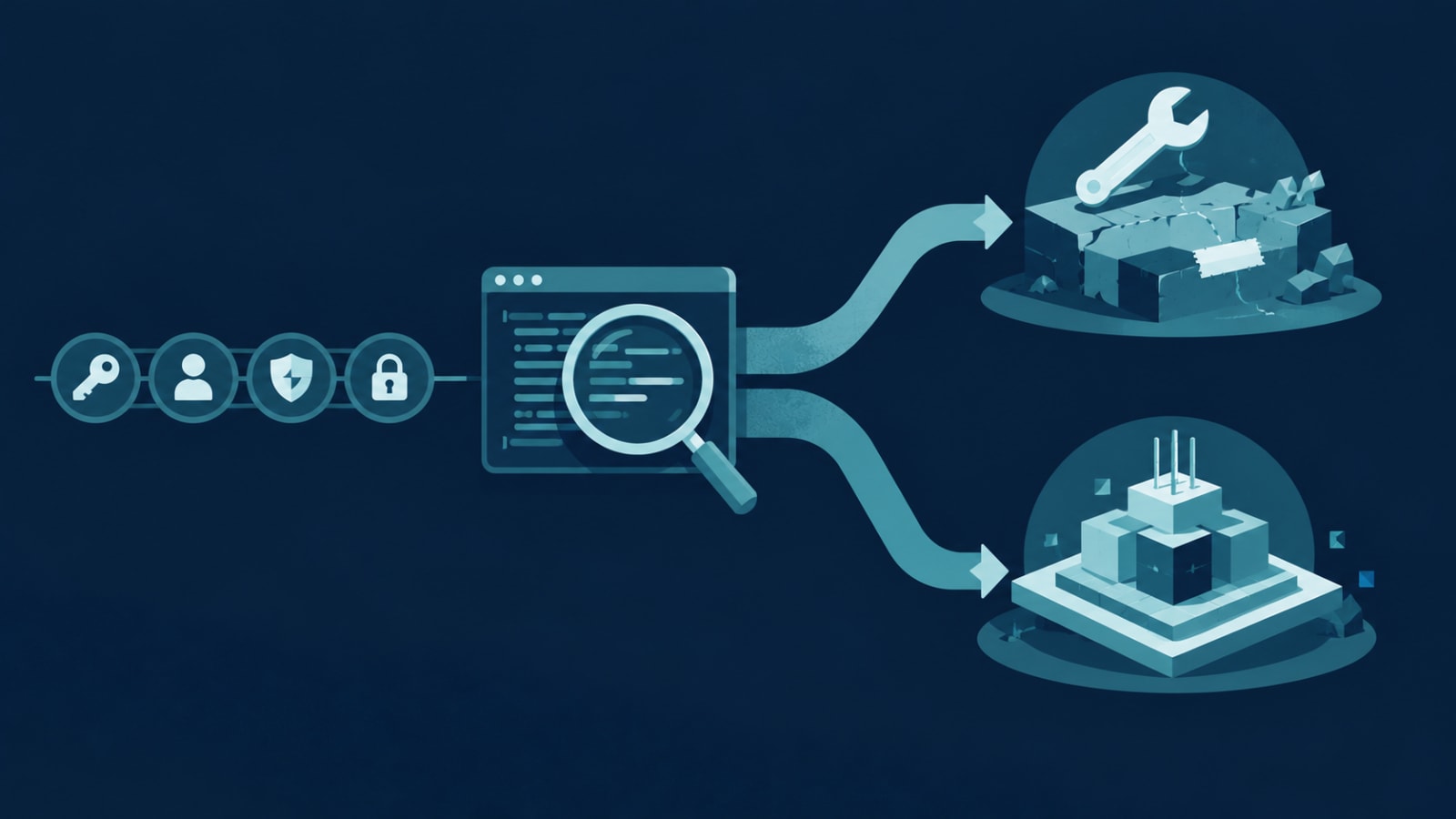
Handing over to a new team
Treat the new engagement as a fresh project with a clear scope, not a vague "please finish it". Give the new team:- The audit findings and the decision you made from them
- An updated scope: what's done, what's being kept, what's left, and what's out
- Access to every account from the checklist above
- Any contact you still have with the previous developer, for questions about undocumented parts
How to stop it happening again
- Register every account in your company's name from day one, and give developers access rather than ownership.
- Ask for weekly demos of working software, not status messages.
- Make sure code is pushed to your repository every week, not delivered at the end.
- Put code ownership and handover terms in the contract.
- Agree a maintenance plan before launch so there's a named team responsible afterwards.
FAQ
Can another developer finish an app someone else started?
Usually, yes — if you have the source code and access to the servers and accounts. A short audit will tell you how much of the existing work can be kept.What if the previous developer won't hand over the code?
Check your contract for ownership and handover terms, ask in writing, and keep a record. If the code can't be recovered, a rebuild is often faster than a dispute, especially if you still have designs and a scope document. For legal options, speak to a lawyer.Is it cheaper to rescue or rebuild?
Rescuing is usually cheaper when the code runs and the structure is sound. Rebuilding is cheaper when every change would fight a broken foundation. An audit gives you the facts to compare both honestly.How long does a code audit take?
For a typical MVP-sized web or mobile app, a few working days once the new team has access to the code and environments.Stuck with a half-built app? We take over existing mobile apps and custom software projects, starting with an honest audit. Book a free call and we'll tell you what can be saved.