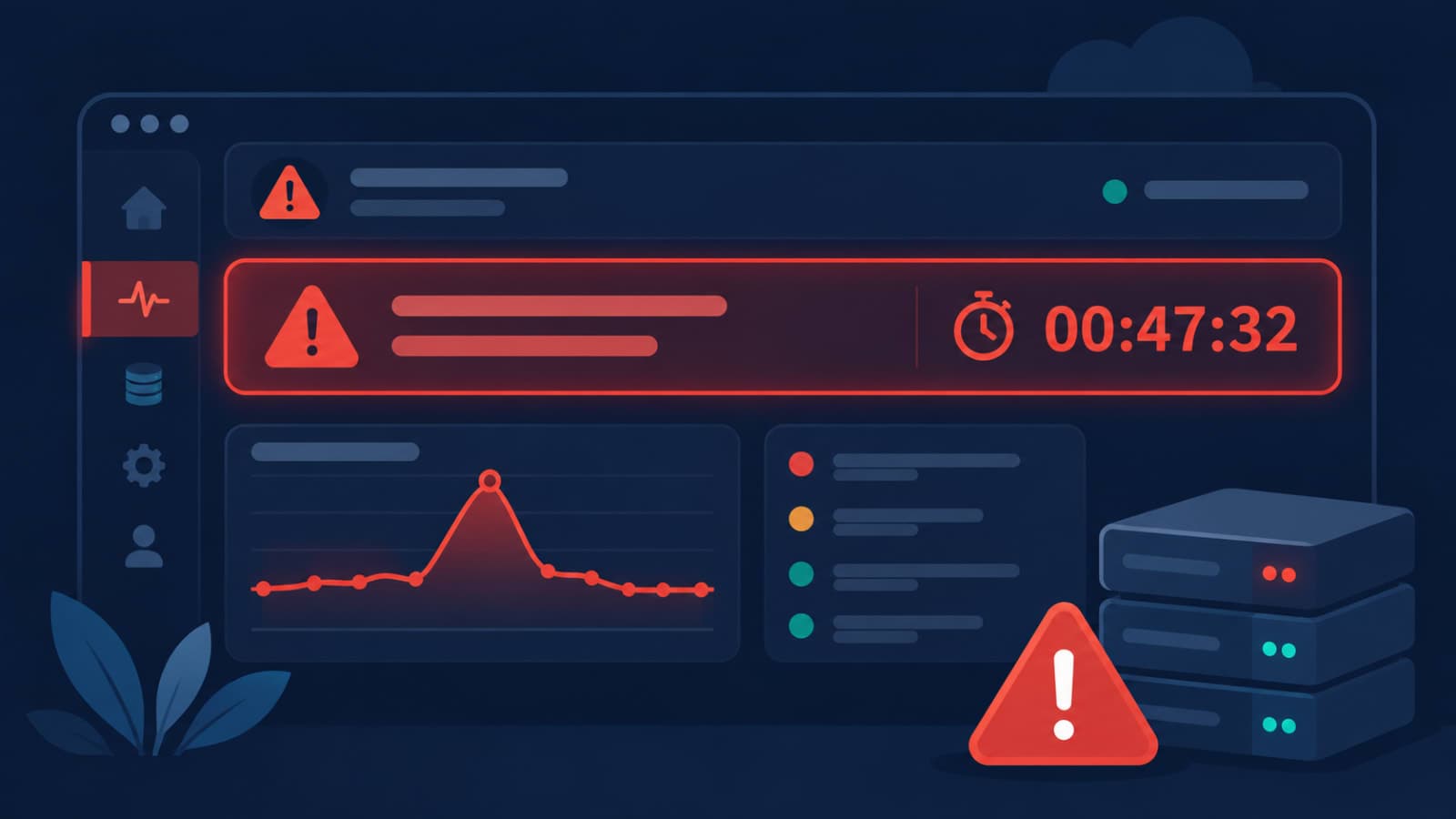
It's 2 p.m. on a weekday, and your app is down. Checkout is throwing errors, the mobile app is stuck on a loading spinner, and the first support ticket lands within minutes. For the next hour, nothing about your business runs the way it's supposed to — and that hour costs a lot more than the revenue that didn't come in while the site was unreachable. Founders tend to picture downtime as an inconvenience. The data says it's closer to a financial event, and one that's worth pricing out before it happens rather than during the incident itself.
None of this requires enterprise scale to matter. The absolute numbers are obviously bigger for a billion-dollar company, but the proportional damage to a lean startup or growing SaaS business can be just as severe — sometimes worse, because there's no dedicated incident response team and no reserve of customer goodwill built up over a decade.
The Immediate Financial Hit
Industry surveys put average downtime costs anywhere from roughly $9,000 to $15,000 per minute across large enterprises, but that figure isn't the useful one for most Fall Rise-sized clients. What matters more is the range reported specifically for smaller companies: startups and small businesses typically report losses in the low hundreds of dollars per minute rather than thousands, though this swings hard depending on the business model — an e-commerce checkout going down during a peak sales hour costs far more than a B2B dashboard being briefly unreachable overnight.
The simplest way to estimate your own exposure is a straightforward formula: take your revenue per hour, multiply it by the hours of downtime, then add recovery costs, lost engineering productivity, and an allowance for the slower-moving damage — customer churn and reputational cost — that doesn't show up on the invoice for that hour but shows up in the numbers a quarter later.
- Direct revenue loss — transactions, sign-ups, or bookings that simply don't happen while the app is unreachable.
- Recovery costs — engineering overtime, incident response, and any customer credits or refunds issued afterward.
- Lost productivity — internal tools going down affects your own team's output, not just customers.
- Reputational cost — the outage that gets noticed and shared publicly does more damage than the one that's fixed quietly and quickly.
What Actually Breaks During That Hour (Beyond Revenue)
Your Support Queue Floods Immediately
An outage generates a spike of near-identical tickets in minutes, and if your support team doesn't have a fast way to confirm "yes, we know, we're on it" versus investigating each report individually, the flood turns into hours of duplicated triage. This is a different failure mode than the recurring bug pattern covered in why your support team keeps escalating the same bugs, but it stresses the same process gap: without a shared status view between support and engineering, every agent ends up escalating the same incident separately.
Search Engines Notice Too
If Googlebot happens to crawl your site during the outage window, a page that normally returns content instead returns a server error, and repeated failures can quietly affect how that page is treated in search results. It's rarely catastrophic from a single short outage, but it's one more reason uptime and SEO health aren't separate concerns — a point covered in more depth in post-launch SEO: why Google Search Console and Bing never stop working.
Your Engineers Stop Building and Start Firefighting
The hour of downtime rarely costs one hour of engineering time. Diagnosing the root cause, deploying a fix, verifying it held, and writing the post-incident notes usually adds up to several times the outage's actual duration — time pulled directly from whatever was on the roadmap that week.
The gap between companies that detect outages in the first minute and those that learn about them from social media is the gap between a near-miss and a board-level incident.
Common observation among site reliability teams
Why Downtime Actually Happens
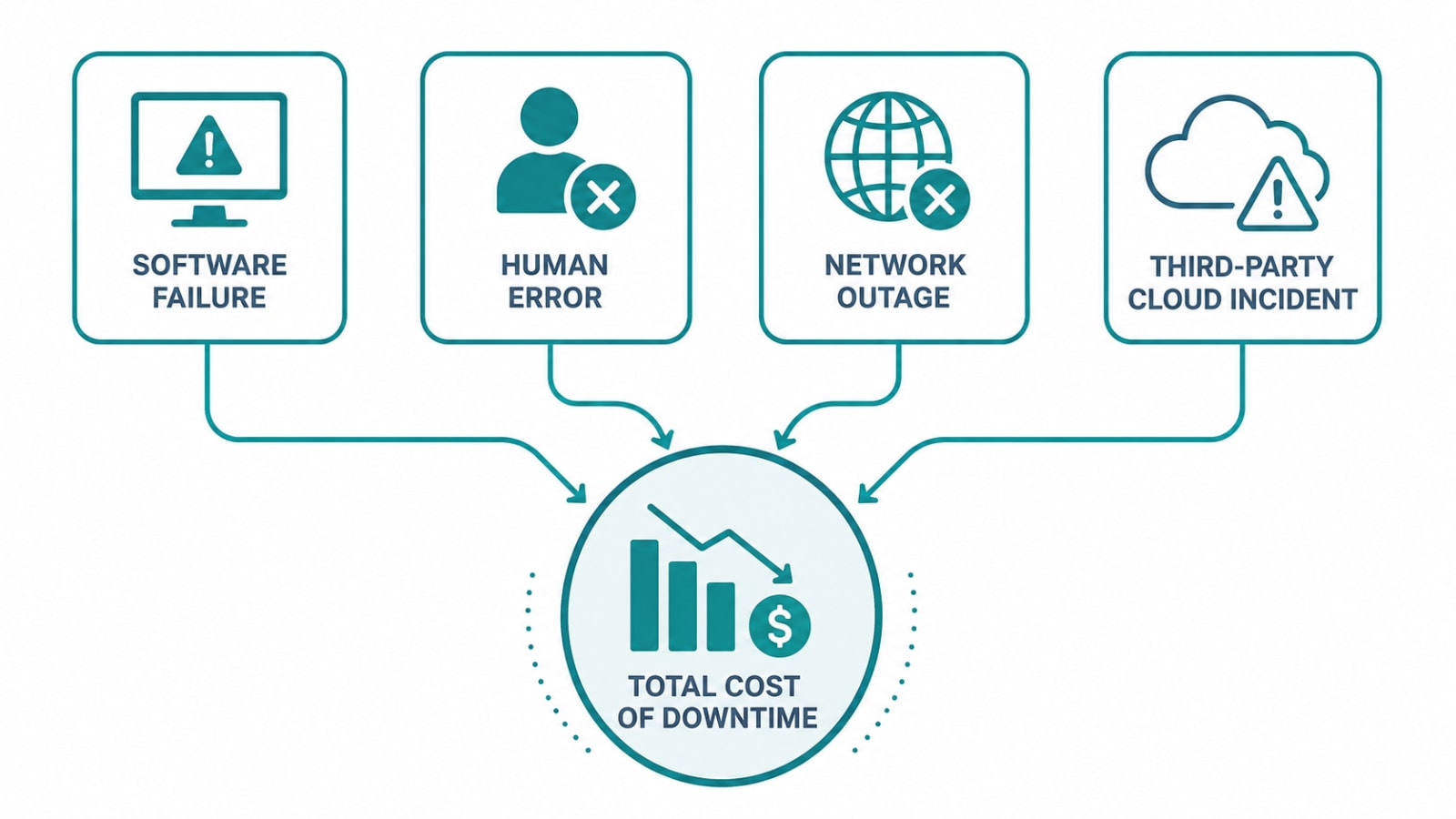
The causes behind most outages haven't shifted dramatically in recent years, even as the infrastructure underneath has matured. Software failures, misconfigurations, and human error remain the leading causes of unplanned downtime, ahead of pure hardware failure — which has become rarer as more workloads moved to managed cloud infrastructure. Network-layer issues and third-party outages, like a regional cloud provider incident, round out the top causes, and those are the hardest to prevent directly since they happen outside your own codebase.
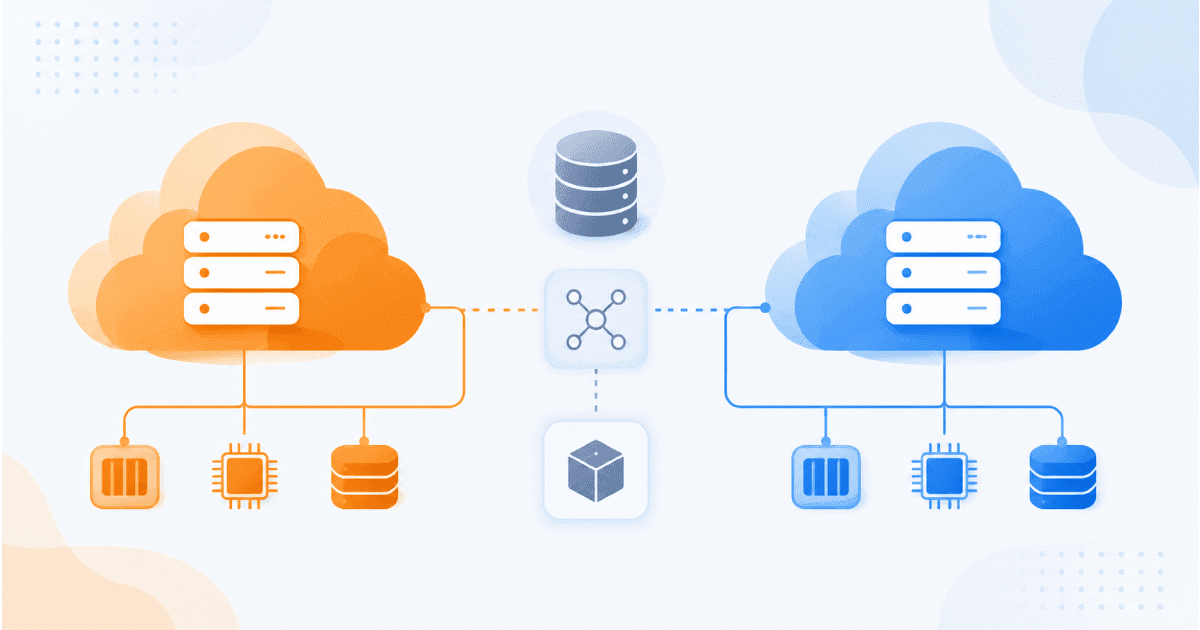
This is exactly why the choice of cloud provider and hosting setup matters more than it looks like at first glance — a decision covered in GCP vs AWS for startups: which cloud should you choose?. Redundancy across regions, proper autoscaling, and a hosting provider that's actually monitored rather than "set up once and forgotten" account for a large share of the difference between a five-minute blip and a multi-hour outage.
The Cost That Outlasts the Outage Itself
The visible hour is rarely the full bill. Data reconciliation after an outage — making sure no transactions were half-completed, no webhooks were dropped, no records were left in an inconsistent state — can take engineering days to fully clear, especially if the outage happened mid-write to the database. This is also where backup strategy stops being an abstract best practice and becomes the difference between restoring cleanly and rebuilding data by hand, a distinction covered in do you actually need backups, or is your hosting provider handling it?
How to Reduce Your Exposure
- Set up external, multi-location monitoring so you find out about an outage from an alert, not from a customer tweet or a support ticket flood.
- Confirm your backup and recovery plan actually gets tested, not just configured once and assumed to work when it's finally needed.
- Separate critical paths from non-critical ones in your architecture, so a failure in a secondary feature (like a notifications service) can't take down checkout or login with it.
- Write a short incident response plan in advance — who gets paged, who updates the status page, who talks to customers — so the first ten minutes of an outage aren't spent figuring out roles.
- Review your hosting setup for single points of failure, particularly around database replication and region redundancy, before an outage forces the review for you.
How We Approach Uptime at Fall Rise
Uptime isn't something we bolt on after launch — it's part of how we scope hosting and deployment from day one, including monitoring, backup verification, and redundancy planning appropriate to what the product actually needs. On platforms like Bhaada, our logistics and parcel platform, and RentEra, our rental platform, that means the systems handling live bookings and deliveries are built with failure isolation in mind, so one component failing doesn't cascade into a full outage. You can see more of how we structure this across our project portfolio.
This applies across the stack we build on — the backend APIs that need to stay available under load, the SaaS platforms customers depend on daily, and any custom software where downtime means a client's own operations stall, not just a metrics dashboard.
An hour of downtime is never really an hour — it's an hour of lost revenue, several hours of recovery work, and a slower tail of customer trust that takes longer to rebuild than the incident took to fix. The businesses that weather outages well aren't the ones that never go down; they're the ones that priced the risk in advance and built accordingly. If your uptime setup hasn't been stress-tested since launch, let's talk.