
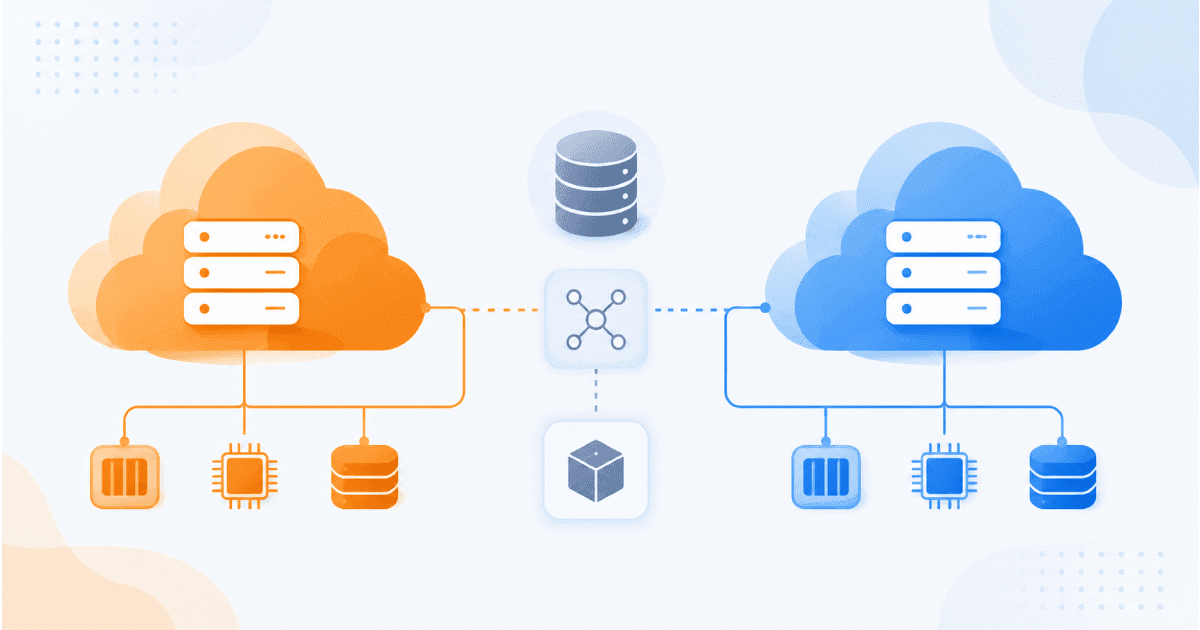
Every new startup hits this decision in the first sprint: which cloud does the backend actually run on? The honest answer is that both AWS and GCP will comfortably run your product — the real question isn't capability, it's which platform matches your team size, your budget runway, and how much time you want to spend on infrastructure instead of features. We've shipped production apps on both, and the trade-offs are consistent enough to lay out clearly rather than defaulting to whichever one is more famous.
The Short Answer
For most early-stage startups — a small team, a handful of services, and a product still finding its market — GCP is the easier starting point: simpler pricing, a more predictable console, and free-tier credit that covers a meaningful chunk of the first year. AWS becomes the stronger choice once you need its much wider service catalog, an enterprise customer specifically requires it, or your team already has deep AWS experience. Neither choice is permanent or irreversible, but switching later is real engineering work, so it's worth getting right the first time.
Startup Credits: What You Actually Get
Both platforms subsidise early-stage usage heavily, and the numbers are the first thing most founders search for. AWS Activate runs a tiered program — a no-strings $1,000 tier for bootstrapped teams with no accelerator affiliation, scaling up to roughly $100,000 for startups backed by a recognised VC or accelerator. Google for Startups Cloud Program follows a similar shape but tends to be more generous at the top end, with qualifying startups accessing up to $100,000 in standard credits and considerably more for AI-focused companies training on Vertex AI or TPUs. If you're not VC-backed yet, GCP's free-tier plus a smaller no-application credit path is usually easier to get started with than AWS's application-gated tiers.
- Bootstrapped, pre-funding — GCP's lower-friction entry credits and $300 trial get you further without an accelerator letter.
- VC-backed, Series A track — both AWS Activate Portfolio and Google for Startups can unlock five- or six-figure credit tiers; apply to both if eligible.
- AI/ML-heavy product — GCP's AI-specific credit tiers and Vertex AI/TPU access are typically larger and easier to qualify for than AWS's equivalent.
- Enterprise-facing SaaS — check whether target customers' procurement or compliance teams have a stated cloud preference before committing either way.
Cost Optimisation: Where the Bills Actually Diverge
Sticker-price comparisons between AWS and GCP rarely tell the real story, because the difference shows up in how predictable the bill is, not just the headline compute rate.
Pricing Model Complexity
AWS gives you more pricing levers — On-Demand, Reserved Instances, Savings Plans, Spot — which is powerful once you know your workload's shape, but genuinely hard to estimate accurately in the first few months when usage patterns are still unstable. GCP's sustained-use and committed-use discounts apply more automatically and predictably, which matters more than it sounds like when a two-person team is trying to forecast burn rate alongside everything else.
Egress and Data Transfer
Data leaving the cloud — API responses, file downloads, CDN origin traffic — is billed by both providers, and it compounds faster than most founders expect for media-heavy or API-heavy products. GCP includes a modest free monthly egress allowance; AWS's egress pricing is comparable but has fewer built-in free thresholds. Either way, for a media- or file-heavy app, pairing your compute layer with an egress-free object storage option like Cloudflare R2 rather than routing everything through the cloud provider's own storage is usually the bigger lever than which cloud you picked in the first place.
The Credit Cliff
Whichever platform you choose, build a plan for what happens when the credits run out — not if. Startups that architect for the free tier's exact shape (specific instance types, specific regions) sometimes discover their real unit economics only once full pricing kicks in. Track your actual paid-equivalent spend from month one, even while credits are covering it, so the transition to paid billing isn't a surprise.
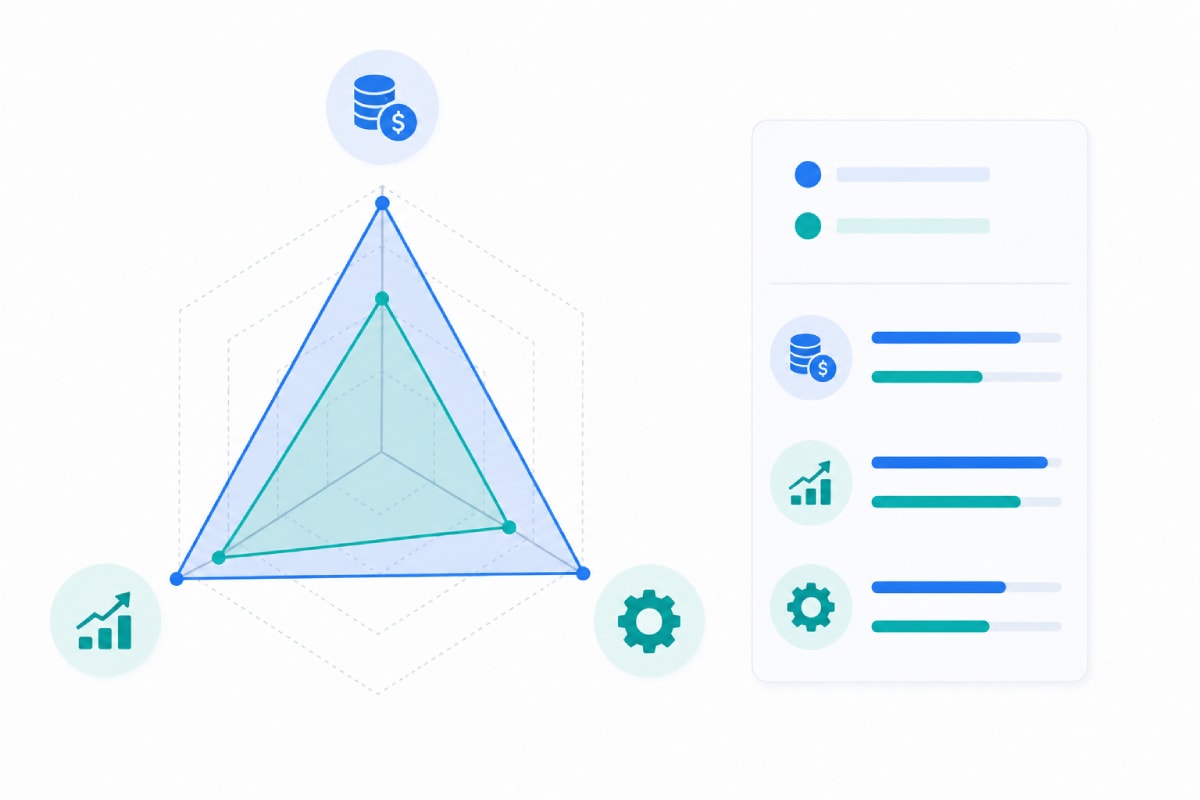
Scalability: Will It Hold Up as You Grow?
At startup scale — hundreds to low tens-of-thousands of users — both platforms scale horizontally without architectural rewrites, so this is less of a differentiator early on than founders assume. The gap opens up in how much manual tuning that scaling requires.
- Compute autoscaling — GCP's Cloud Run and autoscaling Compute Engine groups tend to require less manual configuration to scale cleanly than AWS's equivalent Auto Scaling Groups, which offer more control but expect more setup.
- Managed databases — Cloud SQL and AWS RDS are comparably capable; the deciding factor is usually which one your team already knows how to tune, since both need real attention past a certain query volume.
- Analytics at scale — if your product leans on heavy data analytics or reporting, GCP's BigQuery is widely regarded as the stronger built-in option; AWS's equivalent (Redshift) is capable but typically needs more setup and ongoing tuning.
- Global reach — AWS has more regions and edge locations overall, which matters if you're launching multi-region from day one rather than starting in a single region and expanding later.
Maintenance: The Cost Nobody Puts in the Budget
The cloud bill is the visible cost. The invisible one is engineering hours spent on IAM policies, patching, monitoring configuration, and incident response — and this is where team size should drive the decision more than raw feature comparisons.
AWS's breadth is a double-edged sword for a small team: there's a managed service for almost anything, but each one comes with its own configuration surface, its own IAM permissions to get right, and its own way to misconfigure something into a security or cost incident. GCP's smaller, more opinionated service catalog means fewer choices to make, which is genuinely an advantage when your whole engineering team is two or three people who need to move fast without a dedicated DevOps hire. This is one reason our default recommendation for early-stage app startups — covered in our guide to choosing the right tech stack — leans on GCP's free credit to run the initial backend and database layer before committing to paid infrastructure.
A Simple Decision Framework
Rather than a feature-by-feature scorecard, ask these questions in order — the first one that gives a clear answer usually decides it:
- Does a target enterprise customer's procurement or security team mandate a specific cloud? If yes, that decides it. Don't fight this one.
- Is your team already deeply experienced with one platform? Existing expertise saves more time and money in the first year than any pricing nuance.
- Is AI/ML or heavy data analytics central to the product? GCP's tooling here (Vertex AI, BigQuery) is generally smoother and better-credited.
- Do you need the broadest possible catalog of managed services from day one? AWS wins on sheer breadth if you know you'll need niche services early.
- None of the above apply — you're a small team shipping an MVP fast? Default to GCP for the simpler pricing model and lower maintenance overhead.
Start with one region and one cloud. Multi-cloud is a complexity cost that early-stage startups rarely benefit from.
Common wisdom among startup infrastructure teams
Avoiding Vendor Lock-In Either Way
Whichever provider you pick, the real long-term risk isn't AWS versus GCP — it's how deeply your application code depends on provider-specific services that are expensive to migrate away from later. Favour managed services with portable equivalents (PostgreSQL over a proprietary database engine, containerised services over provider-specific serverless glue where practical) so a future infrastructure decision — adding a second region, moving a specific workload, or even switching providers — stays an option instead of a rewrite. This is exactly the kind of architectural decision worth getting external input on before the first deploy, through proper backend API development and hosting and deployment planning rather than defaulting to whatever a tutorial used.
How We Approach This at Fall Rise
For most client builds — including Bhaada, our logistics and parcel platform — we start on GCP's startup credit to keep early infrastructure costs near zero while the product is still finding its market, then re-evaluate provider and architecture once real usage data exists instead of guessing upfront. You can see how this plays out across different builds in our project portfolio, and if your product needs SaaS-grade multi-tenant infrastructure from the start, that's covered in our SaaS development work specifically.
There's no universally correct answer between AWS and GCP — there's only the answer that matches your team, your budget runway, and what your product actually needs to do. If you're scoping a new build and want an honest recommendation on cloud provider and architecture before spending your startup credits, let's talk.