What 'Effective Price' Actually Means
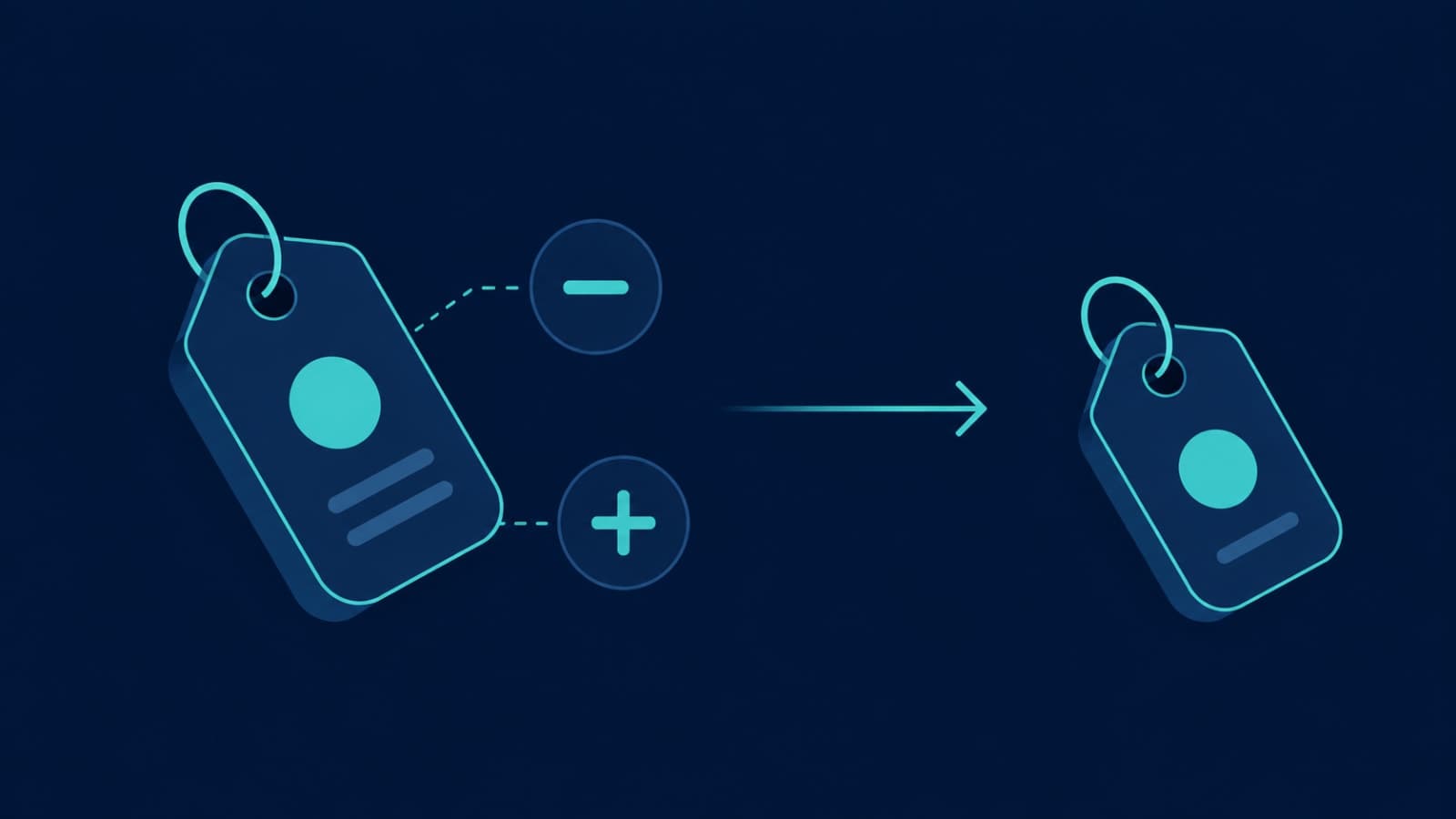
At its simplest, effective price is what you actually collect per unit or per customer, after every adjustment to the list price is accounted for:Effective Price = List Price − Discounts + Additional Fees
Say your list price is ₹5,000, you're running a 15% seasonal discount, and there's a ₹200 payment gateway fee passed through to the transaction. The effective price isn't ₹5,000 — it's ₹5,000 minus ₹750 plus ₹200, or ₹4,450. That gap between list and effective price is exactly where founders lose track of their actual margin, especially once multiple discount types — seasonal, volume, referral, first-purchase — start stacking on the same order.
Why List Price Isn't the Real Number
Most early-stage founders track revenue against list price and wonder later why margins look thinner than planned. The usual culprits are coupon codes that were meant to be short-term and quietly became permanent, volume discounts that were negotiated once for a big customer and never revisited, and payment processing or currency conversion fees that eat a small percentage off every single transaction without ever showing up as a line item anyone reviews. None of these are wrong to have — they're often the right call commercially — but they need to be tracked against effective price, not list price, or your reported margins will look better than what's actually reaching your account.Value-for-Money: Pricing to What It's Worth, Not What It Costs
Cost-plus pricing — take your cost, add a margin — is the easiest way to price something and often the worst, because it ties your price to your internal expenses instead of what the product is actually worth to the person buying it. Value-based pricing works differently: start from what the customer's next-best alternative would cost them (a competitor, doing it manually, or not solving the problem at all), then price to capture a fair share of the extra value your product creates on top of that. A product that saves a customer ₹50,000 a month in labor doesn't need to cost ₹50,000 to justify a premium price — even capturing a modest slice of that value supports a price well above what raw production cost would suggest, as long as it stays below what the customer is actually willing to pay. This is the same thinking we walk through in more depth, specifically for subscription tiers, in how to decide pricing for your SaaS product.How Feature Lists Shape Perceived Value
The features you group into each tier change how valuable the whole package feels, independent of what any single feature actually costs you to build or maintain.- Bundling — packaging several features together as one price makes the bundle feel like a deal, even when a customer would only actively use two of the five things included.
- The decoy tier — a deliberately unattractive middle option can push customers toward the tier you actually want them choosing. A classic version: a basic plan at one price, a full-featured plan at a higher price, and a decoy priced almost the same as the full plan but missing key features — making the full plan look like the obvious, generous choice by comparison.
- Feature-gating — placing one clearly desirable feature just above a tier boundary gives customers a concrete, specific reason to upgrade, rather than a vague sense that the higher tier is "more."
Pricing Hooks and Anchors That Actually Work
Behavioral pricing research backs a handful of tactics that reliably shift how a price feels, even when the underlying numbers haven't changed much.- Anchoring — showing a high-priced option first sets a mental reference point, making everything shown afterward feel more reasonable by comparison. This is why enterprise or "contact us" tiers often sit at the top of a pricing page even when few customers ever choose them.
- Charm pricing — prices ending in 9 consistently outperform round numbers in controlled studies, largely because of the left-digit effect: ₹499 registers as "in the 400s," not "basically 500."
- The decoy effect — covered above as a feature-list tactic, it works exactly the same way applied purely to price points across tiers.
- Bundle framing — presenting a discount as "get X free" rather than "Y% off" tends to land better, because it frames the deal around a tangible item rather than an abstract percentage.
Volume Discounts: Giving a Break Without Giving Away Margin
Discounting for larger purchases is standard practice, but the mechanics of how the discount is structured matter more than most founders assume:- All-units discounts apply the lower price to every unit once a quantity threshold is hit — simple to understand, but can create a sudden drop in total revenue right at the threshold if not modeled carefully.
- Threshold (incremental) discounts only apply the lower price to units above the threshold — the first units are still charged at full price, which protects margin better and avoids the cliff-edge problem of all-units pricing.
- Set a floor before setting a discount — every discount tier should be checked against your actual cost to serve, so a "generous" volume break doesn't quietly turn a large order into a loss-making one.
- Tie discounts to genuine efficiency, not just size — a bulk order that saves you real cost (fewer transactions, predictable demand, lower support overhead) justifies a discount on its own economics, not just as a goodwill gesture.
A discount that doesn't clear your cost to serve isn't a pricing strategy — it's a slower way to lose money on every order.
Common wisdom among B2B pricing teams
How We Approach This at Fall Rise
When we help a client think through pricing — whether it's subscription tiers for a SaaS product or volume pricing for a retail platform like Penso Notes — the starting point is always effective price, not list price. It's the only number that tells you honestly whether a pricing structure is actually working once real-world discounts, fees, and negotiated breaks are factored in. Getting the underlying billing and discount logic built correctly — so effective price is something you can actually see in your admin panel, not something you have to reconstruct in a spreadsheet — is core to our custom software development work.

Effective price, not list price, is the number that tells you whether your pricing strategy is actually working. If you're not sure your current pricing — or the volume discounts layered on top of it — is protecting the margin you think it is, let's talk. A short review now is far cheaper than discovering the gap at the end of a slow quarter.