Manufacturing SMEs Are Still Tracking Inventory and Billing in Excel — Here's Where It Breaks
Manufacturing SMEs tracking inventory and billing in Excel usually don't notice the gap until a stock audit or a short order. Here's where it breaks, and what a connected system looks like.
Case Studymanufacturinginventory managementbillingcase study2 min read·
A lot of manufacturing SMEs run their inventory and billing the same way they did at half their current size: a stock register or Excel sheet updated by hand, invoices generated separately, and a running assumption that the two match up. They usually don't — and the gap tends to surface at the worst possible time, like during a stock audit or a large order that turns out to be short.
Where the numbers quietly diverge
SKU and batch tracking errors compound. Manual entry means transposed numbers and missed updates, and small errors stack up fast across hundreds of SKUs and multiple production batches.
Invoices don't reconcile with stock movement. If billing and inventory are two separate processes instead of one connected system, what's invoiced and what actually left the warehouse can quietly drift apart.
No visibility across shifts or lines. A spreadsheet updated once a day can't show what happened three hours ago on a different line — so problems get caught late, if at all.
Month-end becomes a reconciliation project. Instead of a report that's already accurate, closing the books means manually chasing down where the numbers stopped matching.
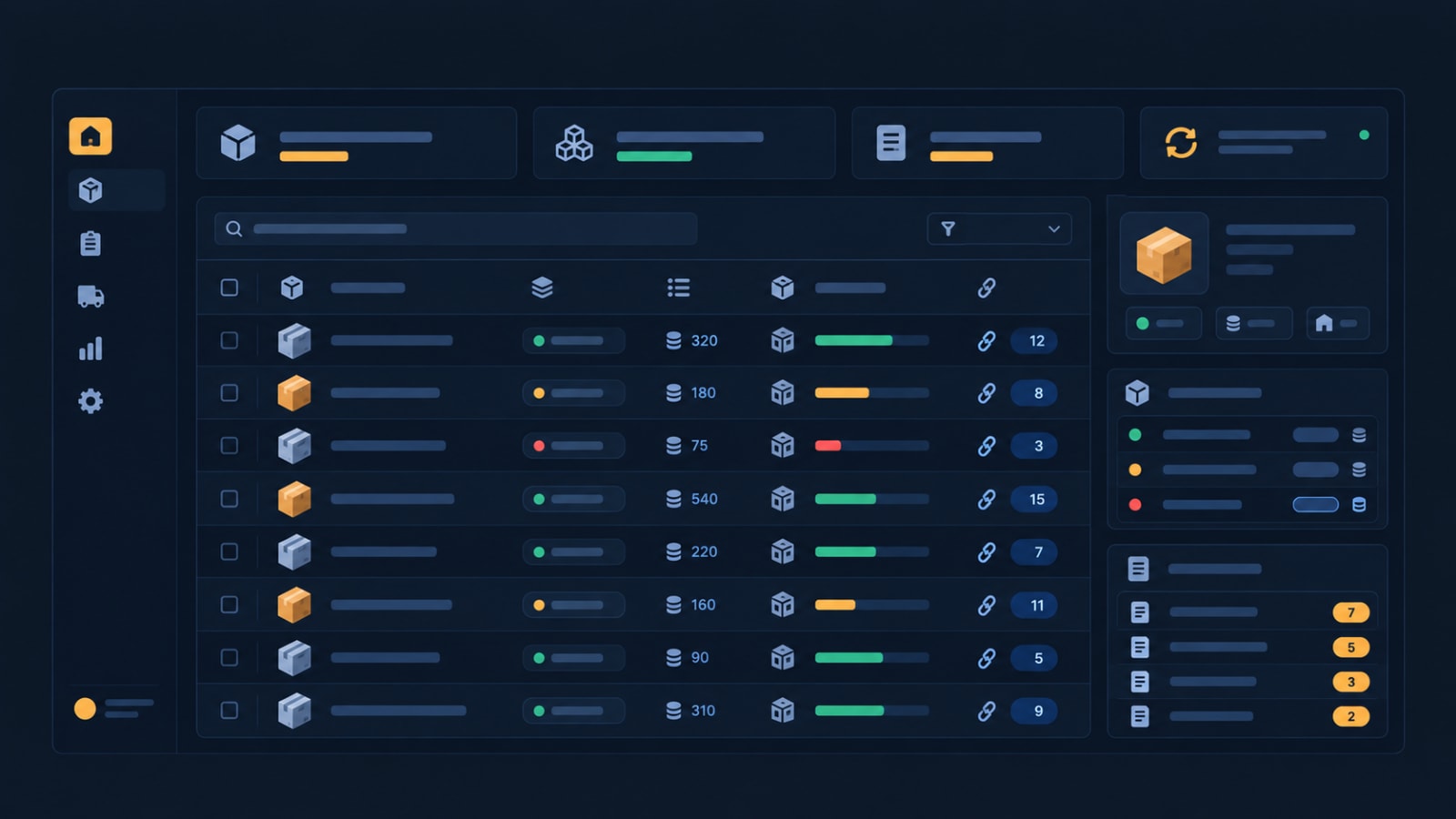
Stock and billing connected by design, instead of reconciled by hand at month-end.
What actually closes the gap
Inventory that updates automatically as stock moves, not on a manual entry schedule
Billing tied directly to actual stock movement, so invoices and inventory can't silently drift apart
Real-time visibility across shifts and lines, not a once-a-day snapshot
Built around your actual transaction complexity — batches, SKUs, multiple lines — not a generic template
What this looks like built
This is the kind of system we built with Umiya Inventory — built around real transaction complexity instead of forcing a manufacturing business into a generic inventory template. Stock and billing stay connected by design, so reconciliation isn't a monthly fire drill.
If your month-end still involves chasing down where inventory and invoicing stopped matching, that's usually a sign the two were never actually connected in the first place. Get in touch to talk through what a connected system would look like for your operation.