

Every roadmap meeting in 2026 eventually hits the same question: should we add AI to this? The honest answer is that AI features split cleanly into two piles — ones that measurably save users time or money and get used every week, and ones that look great on a landing page and get clicked once. Gartner has already placed enterprise AI in what it calls the "trough of disillusionment" for 2026 — buyers have stopped rewarding demos and started demanding outcomes. Building AI into your SaaS isn't a yes/no question anymore. It's a per-feature question, and this guide is a framework for answering it honestly.
Why This Question Is Harder Than It Looks
Three things make this decision riskier than "just add a chatbot" tutorials suggest. First, users have grown skeptical of AI-labeled features — a mid-2025 CNET/YouGov survey found roughly half of US smartphone owners aren't willing to pay extra for AI features at all, and that reluctance shows up in SaaS buying behavior too. Second, regulators are now treating exaggerated AI marketing claims as a real compliance risk, not just enthusiastic copywriting — the EU AI Act's transparency requirements take effect in August 2026, and the SEC has already brought "AI washing" enforcement actions in the US. Third, and most practically: a postmortem review of startup failures between 2022 and early 2026 found AI-first companies were the largest single failure cohort, with a specific pattern — thin API wrappers that vanished the moment the underlying model provider shipped the same capability natively.
None of that means skip AI. It means the bar for "worth building" is higher than most teams assume, and the features that clear it look different from the ones that get demoed at launch events.
AI Features That Actually Drive Revenue
The pattern across AI-native SaaS companies that are genuinely growing faster than their peers is consistent: the AI is embedded inside a core workflow the user already depends on, not sitting next to it as an optional extra. Emergence Capital's benchmark study of 500+ B2B SaaS companies found AI-native products growing at roughly four times the rate of the rest of the market, with expansion revenue — not new logos — accounting for the majority of that growth. That detail matters: the AI features that drive revenue tend to be the ones existing customers pay more for over time, not the ones that win a first sale and then go untouched.
- Automating a task the user was already paying a human to do — ticket triage, first-draft responses, data entry from unstructured input. The value is measurable in hours saved, which is the easiest ROI story to sell.
- Surfacing information the user would otherwise dig for manually — smart search across documents, anomaly detection in usage data, automatic summarization of long threads. High-frequency, low-glamour, and used constantly once adopted.
- Personalizing what the product shows without the user configuring anything — content or feature ranking that adapts to behavior rather than a static default. We covered the mechanics of this in more depth in our piece on smart content delivery and retention — the same principle applies whether the personalization engine is rule-based or AI-driven.
- Reducing time-to-value during onboarding — AI that configures sensible defaults from a user's first few actions instead of showing an empty state, shortening the gap between signup and the "aha" moment.
What Users Actually Want vs What They Skip
There's a reliable tell for which category a feature falls into: does it save the user a step, or does it add one? Features that insert an extra click, an extra prompt to write, or an extra output to review before the user gets what they wanted tend to get ignored after the first try, no matter how impressive the underlying model is.
- Used repeatedly: inline autocomplete and drafting that appears where the user is already typing, one-click summarization of something they'd otherwise read in full, automated categorization or tagging that removes manual sorting.
- Tried once, then ignored: a standalone "AI assistant" chat panel bolted onto the side of the product that requires the user to explain context the app already has, generic "AI insights" dashboards that surface observations nobody acts on, and open-ended prompt boxes that ask users to know what to ask for.
AI Features That Are Just Marketing
Some AI features exist because a competitor announced one, not because a user asked for it. These are the ones most exposed to the "AI washing" scrutiny regulators and buyers are both applying more aggressively in 2026 — and they're the first thing a technical evaluator or an informed buyer will dismiss once they realize the "AI-powered" label sits on top of a feature that would have worked identically as a simple rule or lookup.
- Slapping "AI-powered" on a feature that's really just a filter, a template, or a static rule with no model involved — easy to spot once a technical buyer asks how it actually works.
- A chatbot widget added purely because "we need an AI story" for the next fundraising deck or sales call, with no measurable reduction in support ticket volume to show for it.
- AI-generated marketing copy or "smart" suggestions that are never validated against what actually converts — impressive in a demo, invisible in usage analytics three months later.
- Announcing an AI roadmap item before the underlying feature is reliable enough for production — the gap between a flawless 45-second demo and real inputs, edge cases, and cost at scale is exactly where AI-first products most often quietly fail.
If you can't describe what a user does differently because of the AI feature, in one sentence, it's not a feature yet — it's a demo.
How to Evaluate Which AI Features Your SaaS Actually Needs
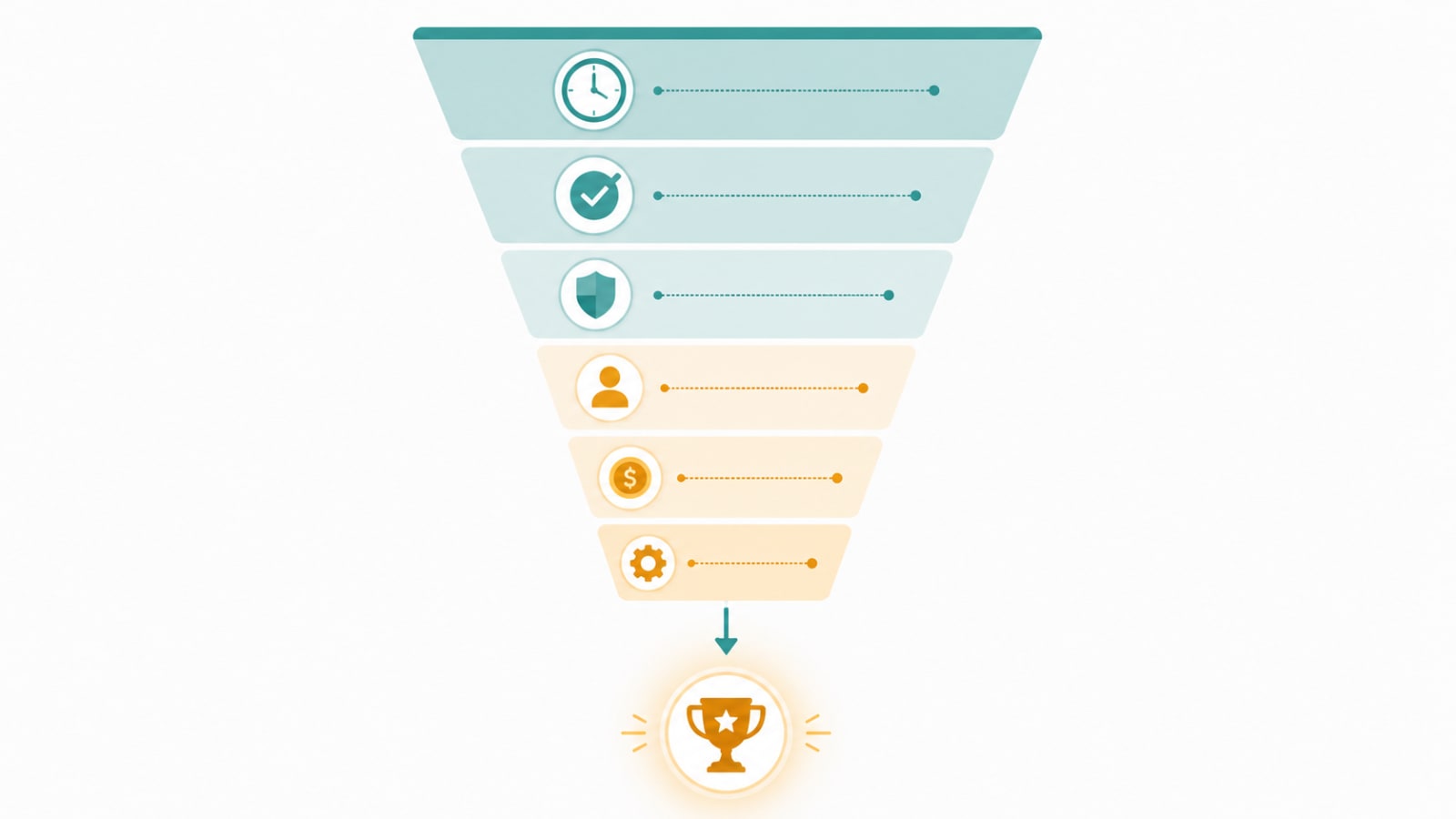
Run every candidate AI feature through the same set of questions before it goes on the roadmap. Most ideas fail at least one of these, which is exactly the point — it's cheaper to find out in a planning doc than after three sprints of engineering time.
- Is this solving a high-frequency, high-value problem, or a rare one? AI infrastructure and inference cost the same whether it's used once a month or fifty times a day — only frequent use justifies the investment.
- Can you name the metric that proves it's working? Automation rate (what % of the task is now handled without a human), accuracy against a labeled benchmark, or time-to-outcome — if there's no metric, there's no way to know if it's actually helping.
- What happens if the model provider ships this natively next quarter? If the honest answer is "we lose the feature overnight," you're building a thin wrapper, not a product advantage — the differentiation needs to come from your data, workflow, or integration, not the raw model call.
- Does it need a human in the loop, and have you built for that? Features that can silently produce a wrong answer — which most generative AI features can — need a clear path for the user to catch and correct it, not just a confidence score nobody looks at.
- What does it cost per use, and does that scale with revenue? A feature that costs $0.02 per call is fine at 10 users a day and a real budget problem at 10,000 — price and infrastructure decisions need to be made together, not after launch.
- Would a simpler, non-AI implementation solve 80% of this just as well? Rule-based logic, a good search index, or a well-designed form sometimes outperforms an AI feature on cost, reliability, and speed — reach for AI when the problem genuinely needs it, not by default.
The Hidden Cost Nobody Budgets For
Model API costs have dropped sharply, but they still scale with usage in a way traditional SaaS features don't — a database query costs roughly the same whether it runs 100 or 100,000 times; an LLM call doesn't. Teams that price an AI feature into a flat subscription tier without modeling per-user inference cost at scale routinely discover the feature is quietly eating gross margin months after launch. Usage-based or hybrid pricing that mirrors the actual cost structure — rather than bundling AI "for free" into an existing tier — is what's kept the strongest AI-native SaaS companies from destabilizing their unit economics as adoption grows.
How We Approach This at Fall Rise
When AI comes up in a project scope, the first conversation is almost never about which model to use — it's about which specific workflow the feature is meant to shorten, and whether that workflow is common enough to justify the ongoing inference cost. That framing shapes how we build AI into products across SaaS development and custom software development engagements — AI logic lives inside backend services we can monitor for cost and accuracy over time, not scattered client-side calls nobody's tracking. For products like Bhaada and RentEra — see both in our project portfolio — that's meant favoring targeted automation inside an existing mobile app workflow over a general-purpose AI assistant nobody asked for.
The startups getting real value from AI in 2026 aren't the ones with the longest "AI-powered" feature list — they're the ones that shipped two or three AI features deeply embedded in a workflow users touch every day, and skipped the rest. If you're trying to figure out which AI features are actually worth building into your product, let's talk — sometimes the most valuable part of the conversation is the list of features we recommend you skip.